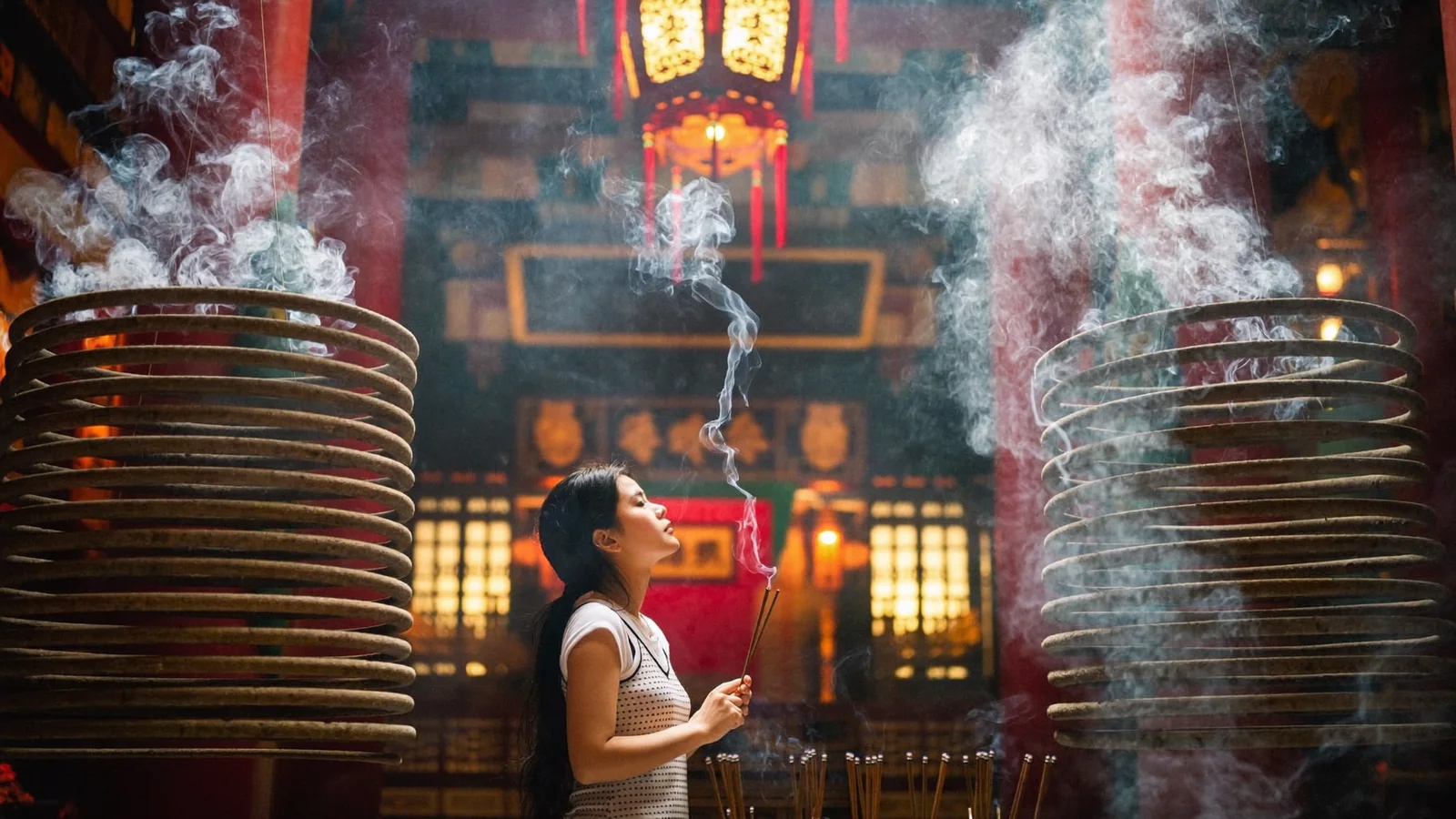
Illustration: Yum Cha Now, AI-generated. It sets the scene and is not a photograph of the venue.
In one of the world's densest cities, the best temples in Hong Kong are pockets of calm scented with sandalwood smoke — and most sit just a few minutes from an MTR exit. From the fortune-tellers of Wong Tai Sin to the giant bronze Buddha on Lantau, these sacred sites blend Taoist, Buddhist and folk traditions into a living part of the city. This 2026 guide rounds up six of Hong Kong's finest temples, with opening hours, the nearest MTR and a few notes on visiting respectfully.
Which are the best temples to visit in Hong Kong?
All six sites below were open to visitors in 2026 and, unless noted, are free to enter. They span the Taoist, Buddhist and folk traditions that shape everyday life here — and each is easy to reach on the MTR. For opening times and festival dates it is always worth double-checking the Hong Kong Tourism Board before you travel.
1. Sik Sik Yuen Wong Tai Sin Temple (嗇色園黃大仙祠)
The most famous temple in the city, Wong Tai Sin is said to "make every wish come true". Worshippers kneel with a cylinder of bamboo fortune sticks (kau chim), shaking until one falls out to be read by a soothsayer in the arcade below. The complex is a riot of red pillars, golden roofs and a Nine-Dragon Wall, and it is busiest around Chinese New Year. Come on a weekday morning for a calmer visit.
2. Man Mo Temple (文武廟)
Built in the 1840s and run today by the Tung Wah Group of Hospitals, Man Mo honours the civil god of literature (Man) and the martial god of war (Mo) — long prayed to by students before exams. Giant coils of incense hang from the ceiling, filling the dim hall with fragrant smoke and soft light. It is one of Hong Kong Island's most atmospheric interiors, and an easy stop on a Sheung Wan antiques-and-galleries walk.
3. Chi Lin Nunnery & Nan Lian Garden (志蓮淨苑 / 南蓮園池)
A serene surprise beside a shopping mall and a motorway, Chi Lin Nunnery is a complex of Tang-dynasty-style wooden halls, built with interlocking timber and not a single nail. Cross the road (or the footbridge) into the adjoining Nan Lian Garden, a manicured Tang-style landscape of lotus ponds, bonsai and a golden pavilion. Together they are the most photogenic slice of calm in Kowloon — and completely free.
4. Po Lin Monastery & the Big Buddha (寶蓮禪寺 / 天壇大佛)
Hong Kong's most monumental sight, the Tian Tan Big Buddha sits atop 268 steps, a 34-metre bronze figure gazing serenely over the hills of Lantau. At its foot, Po Lin Monastery is a working Buddhist sanctuary famous for its vegetarian kitchen. Ride the cable car up from Tung Chung for the views, climb to the Buddha, then refuel on monastery tofu. Give yourself half a day, and pick a clear one — the peak often sits in cloud.
5. Che Kung Temple (車公廟)
Dedicated to a Song-dynasty general believed to ward off plague and bad luck, Che Kung Temple is dominated by a towering statue and a set of brass fan wheels that visitors spin to turn their fortunes for the better. It draws its biggest crowds on the third day of Chinese New Year, when the city's fortunes are ritually divined here. The rest of the year it is a quiet, easy stop right by its own MTR station.
6. Ten Thousand Buddhas Monastery (萬佛寺)
The path up to this hillside monastery is lined with hundreds of life-size golden arhat statues, each in a different pose — a photographer's dream and a proper leg workout. There are far more than ten thousand Buddha figures inside the main hall. It is a steep 400-odd steps up from Sha Tin, so wear decent shoes and bring water in summer. Watch for the resident monkeys, and do not feed them.
The six temples at a glance
Hong Kong temples compared
| Temple | Area | Known for | Hours* |
|---|---|---|---|
| Wong Tai Sin | Wong Tai Sin | Fortune-telling, wishes | ~7am–5:30pm |
| Man Mo Temple | Sheung Wan | Hanging incense coils | ~8am–6pm |
| Chi Lin & Nan Lian | Diamond Hill | Tang timber & garden | Nunnery ~9am–4:30pm |
| Po Lin & Big Buddha | Ngong Ping, Lantau | Giant bronze Buddha | Buddha ~10am–5:30pm |
| Che Kung Temple | Sha Tin | New Year luck, fan wheel | ~7am–6pm |
| Ten Thousand Buddhas | Sha Tin | Golden arhat climb | ~9am–5pm |
*Hours are approximate and change on festival days and public holidays; verified where published, July 2026. Always check before travelling.
How do you visit a Hong Kong temple respectfully?
Temples here are active places of worship, not museums. A little care goes a long way.
Dress modestly
There is no strict dress code, but covering your shoulders and knees is respectful, especially at the monasteries. Comfortable shoes help at hillside sites like the Big Buddha and Ten Thousand Buddhas.
Mind the incense
Feel free to light incense where it is offered, but hold sticks away from other people and place them gently in the burner. Step to one side of doorways rather than blocking them — thresholds carry meaning.
Photography
Photos are usually fine in courtyards, but look for signs before shooting inside main halls, and never photograph people at prayer up close. Keep your voice low.
Donations
Entry is free, but a small donation in the box by the altar is customary if you light incense or make a wish. Cash in small notes is easiest.
Temples are just one thread in Hong Kong's culture. Pair a visit with our guides to the city's best museums, its best art galleries, the top attractions worth your time, the best hikes for temple-and-trail days, and the buzz of Temple Street Night Market after dark.
Frequently Asked Questions
Plan your temple trail
Pick two or three that suit your route, go early and travel by MTR. Hong Kong's best temples are free, welcoming and among the most beautiful corners of the city.