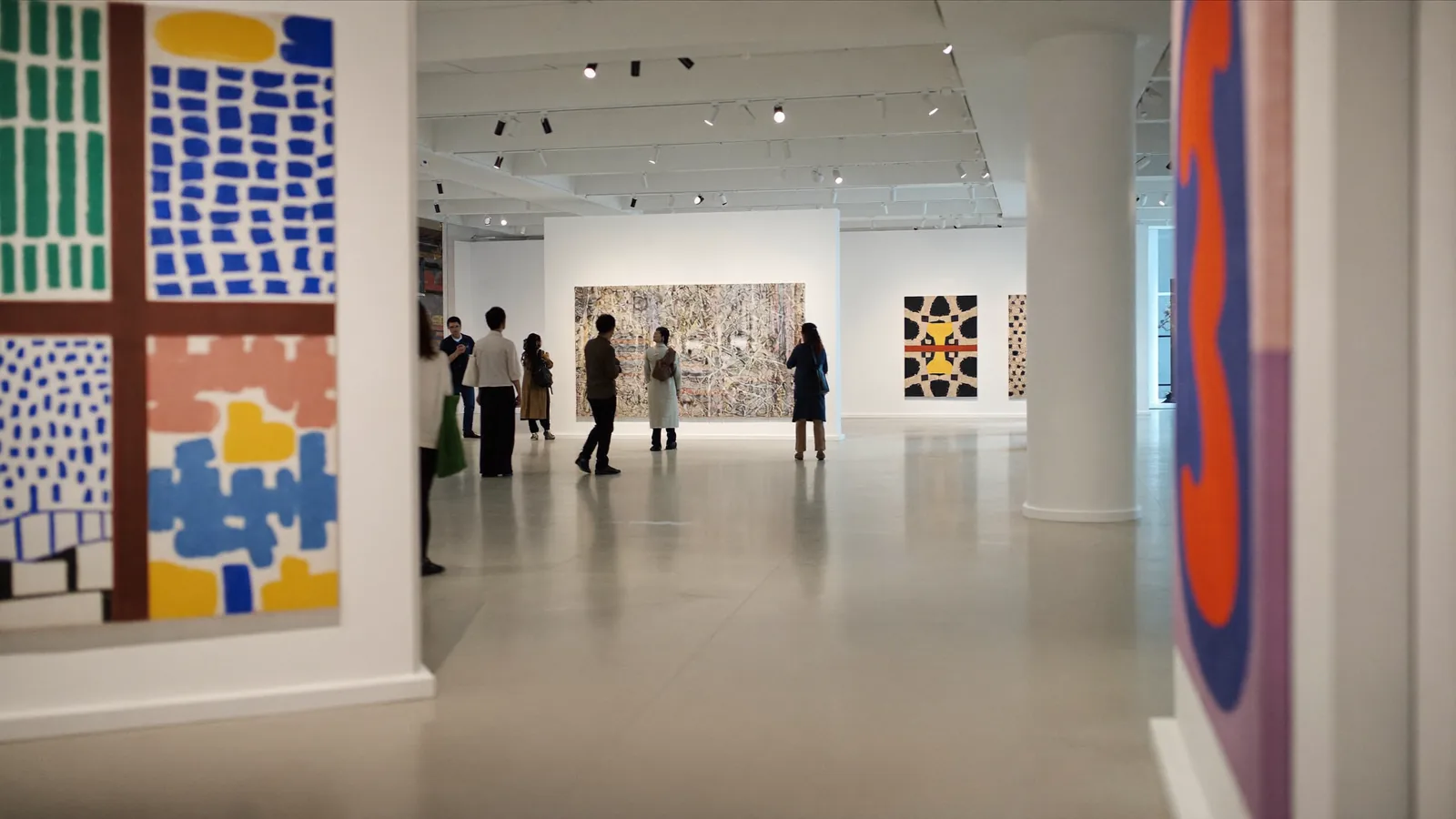
Illustration: Yum Cha Now, AI-generated. It sets the scene and is not a photograph of the venue.
Hong Kong's gallery landscape spans world-class mega-museums (M+ Museum), blue-chip international galleries (Gagosian, Perrotin), and experimental artist-run spaces in the warehouse district of Wong Chuk Hang. Look across the whole scene and the picture that emerges is one of beautiful contradiction: ultra-commercial galleries operating alongside non-profit experimental spaces, international mega-collectors commissioning work alongside emerging local artists still searching for studio space.
Museum-Level Galleries
These are institutions with permanent collections, dedicated curatorial teams, and the resources to mount major international exhibitions. Worth anchoring any art-focused visit around.
M+ Museum
Opened in 2021, M+ is Asia's answer to Tate Modern: a behemoth of 20th and 21st century visual culture with an emphasis on Asian contemporary art, design, and moving image. The architecture alone justifies a visit: Herzog & de Meuron's vertical podium-and-tower design frames unobstructed harbour views from the top floors. Internally, the permanent collection spans painting, sculpture, photography, design objects, and entire rooms of immersive video installations. Major travelling exhibitions run four to six times annually alongside the permanent display. Budget two to four hours for a meaningful visit; a full day rewards serious engagement.
Hong Kong Museum of Art (香港藝術館)
Located on the Tsim Sha Tsui waterfront with views across to Victoria Harbour, HKMoA is the institutional home of Hong Kong's artistic heritage. The collection covers centuries of Chinese calligraphy and ceramics alongside a robust contemporary Hong Kong section that contextualises the city's creative output within broader Asian art movements. Rotating exhibitions bring international works into dialogue with the permanent collection. The waterfront location means a gallery visit pairs naturally with a harbour promenade, especially rewarding at sunset on a weekend (when extended 9pm closing hours apply). At HKD 10 admission (free Wednesdays), it's one of the city's best-value cultural experiences.
Blue-Chip International Galleries
These are the commercial heavyweights: galleries with international rosters, investment-grade inventory, and curatorial clout. Entry is free, but the work on the walls represents serious money. Don't let that intimidate you; staff at well-run commercial galleries actively welcome curious visitors.
Gagosian
Gagosian's Hong Kong outpost, one of the gallery's 19 global spaces, occupies the seventh floor of Pedder Building in Central, a building that has quietly become one of the city's most important gallery addresses. Exhibitions rotate every six to eight weeks, typically featuring artists from the gallery's A-list international roster. The space itself is museum-quality: pristine white walls, precise lighting, generous ceiling heights. For collectors, Gagosian Hong Kong positions the city as a serious node in the global art market during Art Basel and beyond. For the curious visitor, it's a rare opportunity to see major contemporary works up close without a museum queue or ticket price.
Perrotin
Paris-founded Perrotin has multiple Hong Kong locations and consistently delivers some of the city's most visually dynamic exhibitions: the gallery is known for championing artists who sit on the boundary between fine art and popular culture. Whether you're familiar with the work or not, a Perrotin opening is a reliable social event and the gallery's programming often draws some of the city's most visible art-world figures. Check the website for current exhibitions and locations before visiting.
Edouard Malingue Gallery
Edouard Malingue Gallery operates across both Central and Wong Chuk Hang and represents one of Hong Kong's most curator-serious commercial galleries. The programme balances European and Asian mid-career artists with a considered approach that prioritises depth over commercial flash. If you want to understand how a sophisticated gallery builds long-term relationships with artists, and why that matters for the work, a visit to Malingue is instructive.
The Wong Chuk Hang Gallery District
What Detroit did for creative reuse of industrial space, Wong Chuk Hang has done for Hong Kong. Former factory buildings in this Southern District neighbourhood have been colonised by galleries, studios, restaurants, and coffee roasters. The scale of the spaces (high ceilings, raw concrete, sprawling floor plates) gives galleries room to show large-format works that Central's more compact spaces can't accommodate. The community feel rewards unhurried exploration.
Wong Chuk Hang Gallery Cluster: Key Spaces
| Gallery | Focus | Notable For |
|---|---|---|
| De Sarthe Gallery | European masters & young international artists | 10,000 sq ft flagship; founded Paris 1977 |
| Ben Brown Fine Arts | Top-end contemporary (Ron Arad, Lalanne) | The Factory building; internationally celebrated artists |
| Blindspot Gallery | Contemporary photography & image-based work | One of HK's largest gallery spaces; regional & local artists |
| Axel Vervoordt Gallery | Wabi-sabi, ancient & contemporary dialogue | Relocated from Central; atmospheric two-level space |
| Osage Gallery | Emerging contemporary; artist residency | HK artists platform, collaborative programming |
| Empty Gallery | Non-profit experimental; collaborative projects | Free entry; artist-led curatorial approach |
Getting there is straightforward: MTR South Island Line to Wong Chuk Hang Station (Exit B), then a five to eight-minute walk into the industrial buildings along Heung Yip Road and the surrounding streets. Allocate two to three hours to properly explore the cluster. The first Saturday of each month often features extended hours and special events across multiple spaces: check individual gallery websites.
Specialised Galleries
Chinese Ink Painting & Calligraphy
Schoeni Art Gallery (Central) specialises in traditional Chinese ink painting and its contemporary reinterpretation: a niche often overlooked by visitors drawn to the contemporary circuit but richly rewarding for understanding Hong Kong's deep connections to mainland Chinese artistic traditions. Hours: Tue–Sat 10am–6pm. Free entry.
Asian Contemporary
Tina Keng Gallery (Central) focuses on contemporary Asian artists from Taiwan, Hong Kong, and China, positioning itself as a bridge between the region's distinct artistic communities. The curation is thoughtful and the programming rewards visitors who return across multiple exhibitions to see how the gallery builds thematic conversations over time.
Art Basel Hong Kong, When the City Transforms
| What | Details |
|---|---|
| Venue | Hong Kong Convention & Exhibition Centre, Wan Chai |
| Timing | Typically March; check artbasel.com for annual dates |
| Scope | 250+ galleries from 40+ countries; 6,000+ artists represented |
| Gallery Shows | All major commercial galleries mount concurrent solo shows |
| Free Events | Art Central, Late Night Southside (Wong Chuk Hang extended hours) |
| Tip | Book Art Basel tickets early; gallery shows are free and uncrowded by comparison |
Gallery Navigation Strategy
By Experience Level
New to contemporary art: start with M+ Museum (approachable, international context) and HK Museum of Art (cultural grounding), then pick one commercial gallery. Serious art explorers: build a day around Wong Chuk Hang's cluster, De Sarthe, Blindspot, Edouard Malingue, and Axel Vervoordt reward the kind of sustained attention that jumping between Central's individual galleries doesn't allow. For collectors: Gagosian and Perrotin are essential, with Edouard Malingue offering more discoverable mid-career works.
By Time Commitment
2–3 Hours
M+ Museum partial visit (permanent collection highlights) or full Wong Chuk Hang gallery hop (De Sarthe + Blindspot + Axel Vervoordt)
Half Day
HK Museum of Art + harbour promenade, or complete Wong Chuk Hang district exploration including lunch at Classified
Full Day
M+ Museum comprehensive visit (morning) + Gagosian/Perrotin in Central (afternoon)
Art Week
Art Basel season: dedicate a full weekend, Art Basel fair + Late Night Southside in WCH + private gallery preview events
Opening Receptions: Worth Attending
Gallery openings (typically 6–9pm on Thursday or Friday evenings) are free, social, and often feature the artists themselves. They draw a mix of collectors, curators, expats, and curious locals, and the free wine doesn't hurt. Check gallery Instagram accounts for upcoming opening announcements. Major Art Basel-adjacent openings draw the most interesting crowds.
Frequently Asked Questions
Explore Hong Kong's Art Scene
From world-class museums to hidden warehouse galleries: Hong Kong's art ecosystem rewards curiosity at every level. Browse more culture guides at YumChaNow.