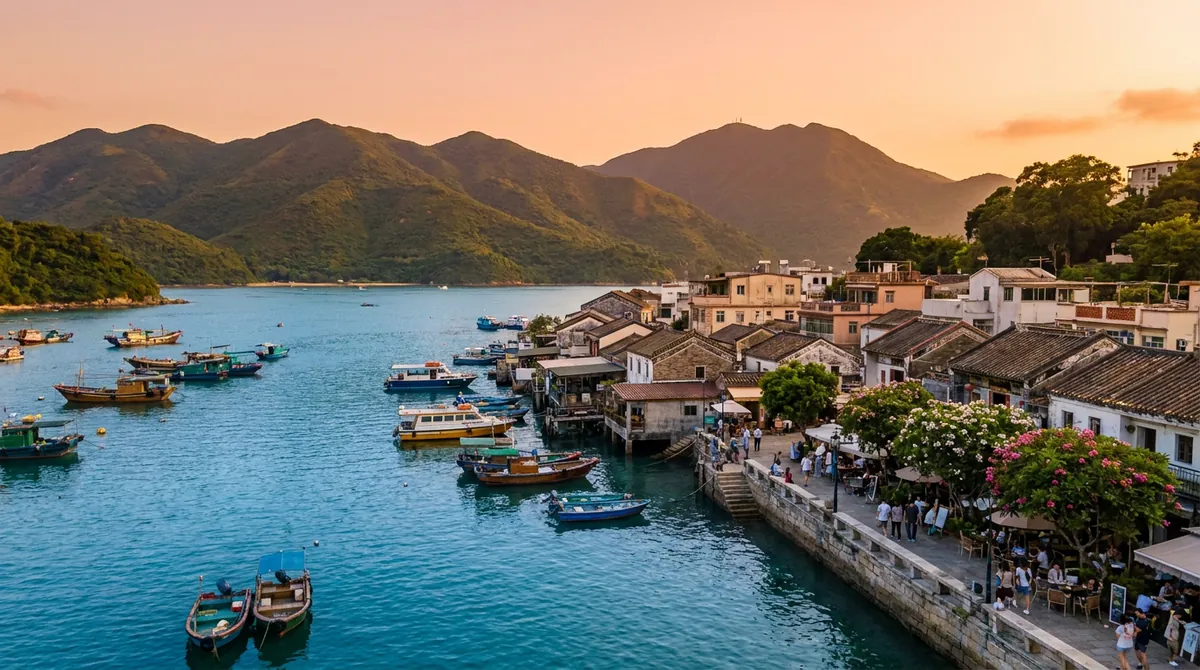
Illustration: Yum Cha Now, AI-generated. It sets the scene and is not a photograph of the venue.
Each summer, the forecourt of one of Hong Kong's most sacred sites turns into a sea of pink and white. The Hong Kong Lotus Festival fills the grounds of Po Lin Monastery (寶蓮禪寺) on Lantau Island with thousands of potted lotuses and water lilies, all blooming in the shadow of the giant bronze Big Buddha. It is one of the city's loveliest, and least hurried, summer outings, and in 2026 it lands just as the school holidays get going.
In This Guide
What is the Hong Kong Lotus Festival?
The Hong Kong Lotus Festival is a free, open-air flower show staged in the grounds of Po Lin Monastery, the great Buddhist complex on the Ngong Ping (昂坪) plateau of Lantau Island (大嶼山). The lotus is a sacred flower in Buddhism, a symbol of purity rising from muddy water, so this is less a carnival than a contemplative summer ritual, set against incense smoke and mountain air.
The festival is young but growing fast. The first edition opened in 2023 with more than 4,000 potted plants; by the third edition in 2025, organisers were displaying over 6,000 potted lotuses in some 400 varieties, alongside roughly 100 species of colourful water lilies and other aquatic plants. That 2025 show, co-organised by Po Lin Monastery, the Institute of Horticulture (Hong Kong) and Sing Tao News Corporation, ran until 2 July and arranged the blooms into themed sensory zones: a visual display, an aromatherapy area, lotus tea tasting and a quiet Zen space.
For 2026, treat the festival as an annual fixture that is highly likely to return on a similar timeline, rather than a confirmed booking. At the time of writing, the monastery had not published the exact 2026 dates, so check before you build a day around it (see when to go below). The flowers themselves, however, do not need a press release: lotus season on Lantau runs through the summer regardless.
Po Lin Monastery & the Big Buddha
Even outside festival week, this is one of the best day trips from Hong Kong. Po Lin Monastery was founded in 1906 by three visiting monks and was originally known simply as "the Big Hut"; it took the name Po Lin, "Precious Lotus", in the 1920s. Today its ornate halls, gardens and the newer Grand Hall of Ten Thousand Buddhas make it the spiritual heart of Lantau, and entry to the grounds is free.
Looming above it on a neighbouring hill is the monastery's most famous neighbour, the Tian Tan Big Buddha (天壇大佛). Completed in 1993, this 34-metre bronze statue is one of the largest seated outdoor Buddhas in the world, and you reach its feet by climbing 268 steps. Here is the detail that ties the whole day together: the Buddha sits on a giant lotus throne, so during the festival, the real blooms below echo the sculpted petals above.
Don't leave without lunch. The monastery's vegetarian restaurant is a Hong Kong institution, serving a simple, satisfying Buddhist spread; you buy a meal ticket on site. It is a fittingly gentle end to a morning among the flowers, and a world away from the city's street-food bustle.
Po Lin Monastery & the Big Buddha
Hours can change for ceremonies and weather. Confirm details on the Hong Kong Tourism Board Ngong Ping page before you set out.
How do you get to Po Lin Monastery?
Getting to Ngong Ping is part of the adventure. Start by taking the MTR Tung Chung line to Tung Chung (東涌) Station and leaving by Exit B. From there you have two routes up the mountain, and right now the choice is being made for you.
The scenic option is the Ngong Ping 360 cable car, a 5.7-kilometre, roughly 25-minute glide over forest, sea and the airport runway. The budget option is New Lantao Bus route 23 from the Tat Tung Road terminus, a winding ride of about 50 minutes that costs only a few dollars. Both drop you in Ngong Ping Village, a short walk from the monastery and the Buddha.
Heads up: cable car closed until 21 June 2026
The Ngong Ping 360 cable car is shut for scheduled annual maintenance from 2 to 21 June 2026. The Big Buddha, Po Lin Monastery and the rest of Ngong Ping stay open as usual. You simply need to travel up by New Lantao Bus route 23 from Tung Chung, or by a blue Lantau taxi, until the cable car reopens. Always check the official Ngong Ping 360 notice for the latest status and fares.
Getting to Ngong Ping
When can you see the lotuses in 2026?
Lotuses are high-summer flowers, so the broad answer is simple: June to August is the season, with blooms typically at their fullest in July. The Lotus Festival proper has clustered around the turn of June into July in recent years, the 2025 edition was on show until 2 July, so a visit in late June or July gives you the best odds of catching the curated displays as well as the natural flowering.
Because the 2026 dates were not yet confirmed at the time of writing, the safe play is to verify before you commit. Check Po Lin Monastery's own channels and the Hong Kong Tourism Board's events calendar close to your trip. Even if you miss the formal festival week, the monastery's lotus ponds and potted displays reward a summer visit, and the site never stops being one of Hong Kong's best islands to explore.
| Window | What to expect | Notes |
|---|---|---|
| 2–21 Jun 2026 | Lotus season building; monastery open | Cable car closed: take bus 23 |
| Late Jun 2026 | Likely festival opening window | Confirm dates; cable car back from 22 Jun |
| July 2026 | Lotuses typically at their peak | Busiest; go early on weekends |
| August 2026 | Late blooms; quieter grounds | Festival displays may have closed |
Dates are based on past editions and the natural season; confirm the official 2026 festival window before planning a trip around it.
Make a day of it on Lantau
The lotuses and the Buddha are the headline, but Ngong Ping rewards a slower visit. A few steps from the monastery, the Wisdom Path lines a hillside with 38 giant wooden columns carved with the Heart Sutra: a short, meditative loop with big views. Ngong Ping Village, where the cable car and bus arrive, has cafés and souvenir stalls for a breather before the trip back down.
Feeling energetic? Lantau is hiking country, and the calf-busting climb up Lantau Peak for sunrise is the stuff of local legend: our guide to the best hikes in Hong Kong has the details. Prefer to island-hop instead? Pair Ngong Ping with a ferry to nearby Cheung Chau, or fold it into a wider summer plan using our round-up of the biggest events in Hong Kong this summer.
A calm day at Ngong Ping
- Morning: MTR to Tung Chung, then bus 23 (or the cable car, once reopened) up to Ngong Ping.
- On arrival: Walk through Ngong Ping Village to Po Lin Monastery and the lotus displays.
- Late morning: Climb the 268 steps to the Big Buddha for the views.
- Lunch: The monastery's famous vegetarian meal (buy a ticket on site).
- Afternoon: Stroll the Wisdom Path, then a slow cable-car or bus ride back.
- Golden hour: Back in Tung Chung in time for an early dinner, or push on to a beach.
Know before you go
This is a mountain plateau, not a city park, so a little planning pays off. Summer on Lantau means heat, humidity and the chance of sudden downpours, and the weather up at Ngong Ping can roll in fast. Carry water, sun protection and a light rain layer, and wear shoes you can climb steps in.
Remember this is a working place of worship: dress modestly, keep your voice down inside the halls, and follow signs about where photography is allowed. For a gentle, mindful day out it is hard to beat, and it sits comfortably alongside the calmer end of Hong Kong's wellness scene.
Frequently Asked Questions
Chase the Bloom
Pick a clear morning, ride out to Ngong Ping and let the lotuses and the Big Buddha do the rest. Then let YumChaNow keep you ahead of Hong Kong's best festivals, islands and things to do.