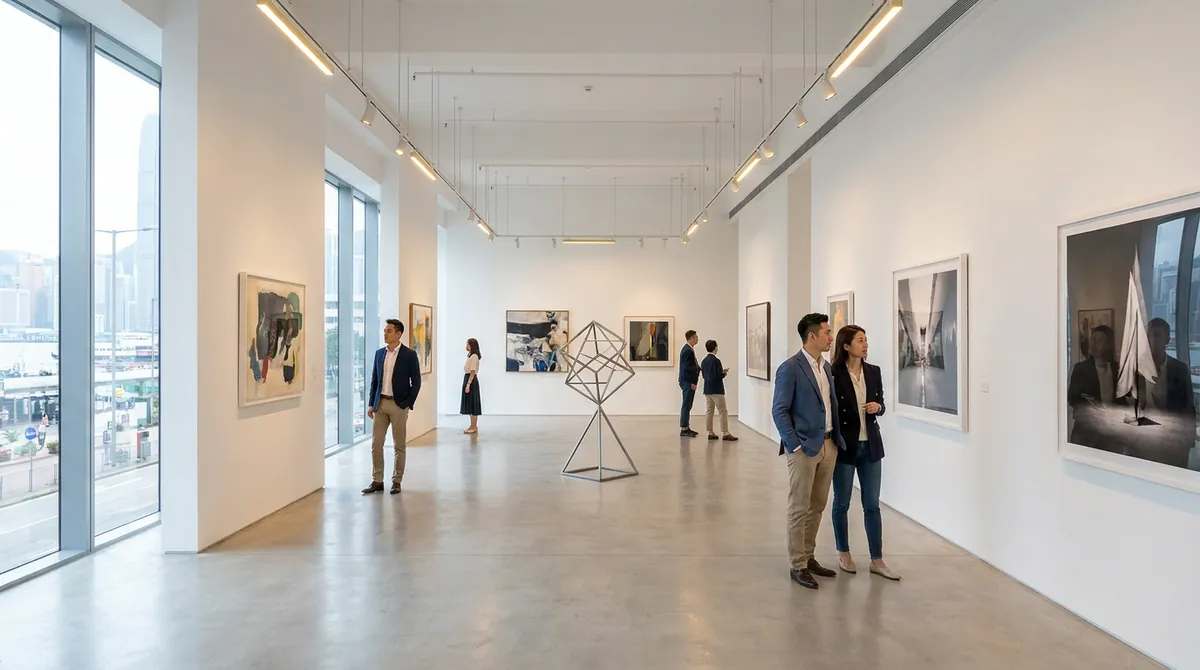
Illustration: Yum Cha Now, AI-generated. It sets the scene and is not a photograph of the venue.
It is not every day that a genuine Claude Monet turns up in Tsim Sha Tsui: let alone two of them, for free. Yet that is exactly what is happening at the Hong Kong Museum of Art, where Monet in Hong Kong has quietly become the cultural talking point of the summer. The pair of Water Lilies canvases anchor "Blooming: The Art of Gardens in East and West", a sweeping show that sets French Impressionism beside imperial Chinese scrolls and the gilded fountains of Versailles. Here is exactly what to see, and how to plan your visit before it closes.
In This Guide
Why a Monet show in Hong Kong is a big deal
Hong Kong sees a great deal of art. Between Art Basel, the West Kowloon museums and a busy commercial gallery scene, a show has to offer something genuinely rare to dominate the conversation. Loaning two original Monets does the trick.
Monet's late Water Lilies paintings are among the most recognised images in Western art, and they almost never travel. To have two of them hanging on the Kowloon waterfront, admission free, is the kind of cultural moment that draws first-time gallery-goers and seasoned collectors in the same queue. The works are on loan from the Art Institute of Chicago, one of the great repositories of Impressionism, as part of a museum partnership that pairs them with Chinese imperial treasures from Beijing's Palace Museum.
The timing helps, too. This is a free, air-conditioned, world-class show landing in the thick of a humid Hong Kong summer: a near-perfect rainy-day or beat-the-heat outing that happens to put you in front of paintings most people only ever see in a textbook.
What is "Blooming: The Art of Gardens in East and West"?
The Monets are the headline, but they are part of a much larger idea. Blooming is an unprecedented Hong Kong showcase of 106 selected paintings and artefacts, all circling a single theme: the garden, and what it has meant to different cultures across the centuries.
The exhibition is co-presented by the Leisure and Cultural Services Department and The Palace Museum, in partnership with the Art Institute of Chicago, and it draws its loans from four major collections: The Palace Museum in Beijing, the Art Institute of Chicago, the Palace of Versailles in France, and the Hong Kong Museum of Art itself. That line-up is why the show feels less like a single-artist display and more like a conversation across continents.
It is organised around three threads: garden landscaping, the activities that happen within gardens, and the artworks gardens have inspired. Walk through and you move from the grand power-gardens of rulers such as Emperor Qianlong of China and King Louis XIV of France, to the more intimate, romantic gardens imagined by master painters. For wider context on the city's museum scene, our guide to the best art galleries in Hong Kong maps where HKMoA sits among the big players.
The two Monets, and the masterpieces beside them
A garden show lives or dies on its star works, and Blooming has stacked the deck. Here are the pieces worth slowing down for, according to the museum's own highlights.
1. Claude Monet: the two Water Lilies
The draw. Water Lilies (1906) and Water Lily Pond (1900) both come from Monet's obsessive study of his water garden at Giverny. Hung together, they show the shift in his eye over those six years, from the wider pond with its Japanese bridge in the 1900 canvas to the dissolving, almost abstract surface of light and reflection in the 1906 work. Both are oil on canvas, roughly a metre across, and on loan from the Art Institute of Chicago.
2. Versailles: The Enceladus Fountain
From the Palace of Versailles comes an anonymous early-18th-century painting of The Enceladus Fountain, a window onto the theatrical water-gardens that King Louis XIV built as pure displays of royal power. It is the European counterweight to the Chinese imperial pieces across the room.
3. The Palace Museum: Qianlong and Wen Zhengming
The Beijing loans are extraordinary. Leng Mei's Imperial Summer Resort, a towering Qing-dynasty hanging scroll, captures the emperor's mountain retreat, while Wen Zhengming's Spring Ablution at the Orchid Pavilion (1542) renders one of the most famous gatherings in Chinese literary history on gold-flecked paper. Together they show how the Chinese scholar-garden was as much a state of mind as a place.
4. Zhang Daqian: Entrance of Bade Garden
From the Hong Kong Museum of Art's own collection, Zhang Daqian's Entrance of Bade Garden (1966) brings the story into the 20th century with his luminous splashed-ink style. It is a reminder that the museum is not just borrowing greatness for the summer. It holds plenty of its own.
If single-artist surveys are more your thing, pair this with the Lee Bul show at M+ across the harbour, or browse our round-up of the best art exhibitions in Hong Kong this summer for the full season at a glance.
Is the Monet exhibition in Hong Kong really free?
Yes, and that genuinely is the headline. Unlike most blockbuster loan shows, Blooming carries no admission charge at all, Monets included. You can walk in off Salisbury Road and stand in front of the Water Lilies without buying a ticket.
There is one practical catch worth knowing. The museum has flagged that, if the galleries get too busy, it may bring in timed-admission ticketing on the day to manage crowds. So while you do not pay, you may occasionally have to wait for a slot at peak times. Below are the verified essentials.
| Detail | Information |
|---|---|
| Exhibition | Blooming: The Art of Gardens in East and West |
| Dates | 24 April – 29 July 2026 |
| Venue | The Special Gallery, 2/F, Hong Kong Museum of Art |
| Admission | Free |
| Star loans | Monet's Water Lilies (1906) & Water Lily Pond (1900) |
Hong Kong Museum of Art: Visitor Essentials
Note: the box office closes 30 minutes before the museum. Hours and any timed-admission arrangements can change: confirm on the official HKMoA exhibition page before you travel.
Because general admission to the museum is free as well, your trip also unlocks the rest of HKMoA (the Chinese antiquities, the Wu Guanzhong ink collection and the harbour-view galleries) so it is easy to make a half-day of it. For more no-cost ideas, see our list of the best free things to do in Hong Kong.
How do you get to the Hong Kong Museum of Art?
The museum sits right on the Tsim Sha Tsui (尖沙咀) waterfront, beside the Hong Kong Cultural Centre and the Clock Tower, and the easiest approach is by train. Take the MTR to East Tsim Sha Tsui Station and leave via Exit J (Exit L6 also works) for a walk of about five minutes. Alternatively, use Tsim Sha Tsui Station, Exit E, then follow Salisbury Road towards the harbour for roughly 150 metres.
Once you are there, the location is a gift. The Avenue of Stars, the Star Ferry to Central and the harbour promenade are all on the doorstep, and the Hong Kong Space Museum sits next door. It is one of the most walkable cultural pockets in the city, which makes the free Monet show an easy anchor for a wider day out.
Free talks, workshops & how to do it well
Beyond the galleries, HKMoA runs a programme of free garden-themed events tied to the exhibition, though some need a little planning. Across June and July 2026 the museum has scheduled hands-on weekend workshops, from bonsai design and dried-flower cards to natural plant-rubbing on tote bags, plus short drop-in mindful-breathing sessions in the galleries. Workshop places are limited and need online registration; the talks and breathing sessions are first-come, first-served. Check the museum's official exhibition page for the current schedule and booking links.
How to Visit Well
- Go on a weekday morning. The museum opens at 10am and the first hour is the calmest; weekends and the Saturday late opening (until 9pm) are busiest.
- Head straight to the Special Gallery, 2/F. See the Monets first while you are fresh, then work back through the Chinese and Versailles pieces.
- Budget 60–90 minutes. It is 106 works; the garden scrolls reward slow looking as much as the Impressionist canvases.
- Pair it with the free permanent galleries. Your visit also covers HKMoA's standing collection: good value for a free day out.
- Mind the Thursday closure. The museum is shut on Thursdays (except public holidays), which catches a lot of visitors out.
- Check the photography signs. Loan works sometimes carry restrictions; look for the gallery notices and skip the flash.
Before You Go
This is a temporary loan exhibition with a hard closing date of 29 July 2026 — after that, the Monets head back to Chicago. Admission is free, but at peak times the museum may switch to timed-admission ticketing, so allow some flexibility on busy weekends and public holidays. Double-check opening hours on the day, remember the Thursday closure, and book any workshop places in advance, as they fill quickly.
Making a cultural weekend of it? Another summer blockbuster is running across town: our guide to Ancient Egypt Unveiled at the Hong Kong Palace Museum covers the city's other must-see museum show, and our round-up of the biggest events in Hong Kong this summer has the wider calendar in one place.
Frequently Asked Questions
See It Before It Closes
"Blooming: The Art of Gardens in East and West" runs only until 29 July 2026 — and it is free. Plan your visit, then let YumChaNow keep you ahead of the next big show in town.