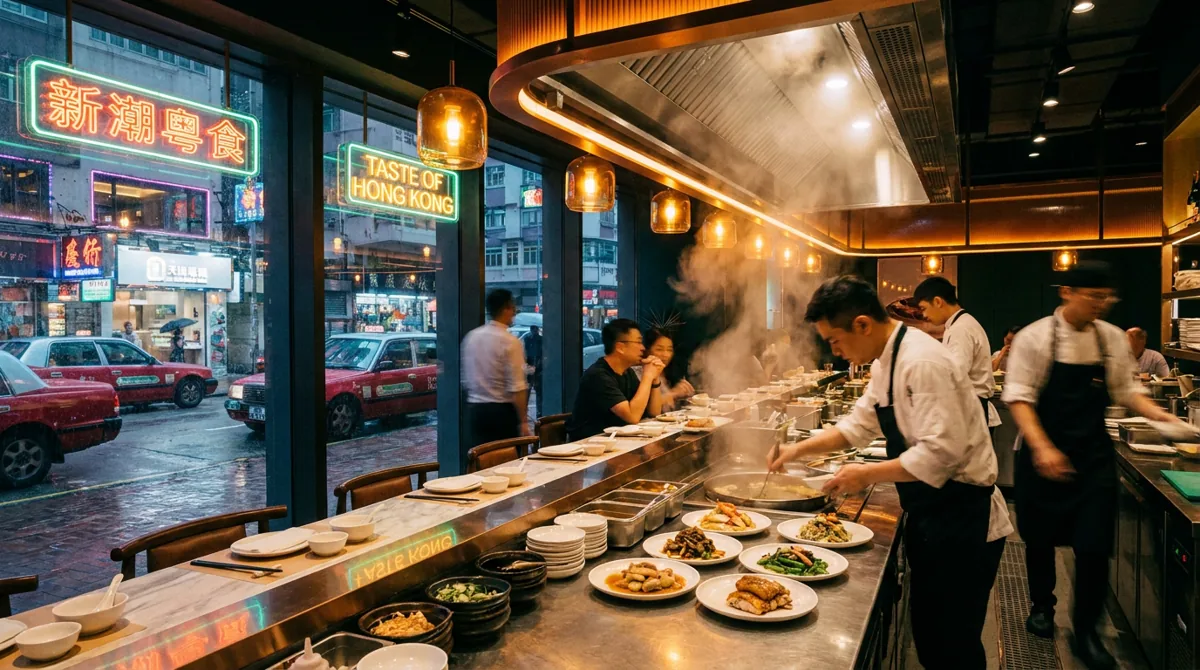
Illustration: Yum Cha Now, AI-generated. It sets the scene and is not a photograph of the venue.
There is no drink more Hong Kong than a cup of milk tea: strong, smooth, tan and faintly bittersweet, the fuel of every cha chaan teng and office morning in the city. It looks simple and it is gloriously cheap, but a great cup hides real technique. The good news: you can make a genuinely good one at home.
This is my recipe and method for proper Hong Kong-style milk tea, plus the tricks that make the difference.
In This Guide
A short love letter to milk tea
If Hong Kong has a national drink, it is this: a small cup of strong, smooth, tan-coloured milk tea, drunk at a cha chaan teng with a pineapple bun, or carried out in a paper cup to fuel a working morning. Hong Kong-style milk tea, descended from the British colonial habit of tea-with-milk but reinvented entirely, is richer, stronger and silkier than anything in a London teapot, thanks to two tricks: brewing the tea fiercely strong, and finishing it with evaporated milk rather than fresh.
The very best versions come from old tea masters who guard their blends, but a genuinely good cup is well within reach at home. Here is how.
Ingredients (makes 2 cups)
You don't need much, but the milk matters: use evaporated milk, not fresh, for the signature richness.
- 4 tablespoons strong black tea leaves (a Ceylon-based blend is ideal; a strong loose-leaf breakfast tea works)
- About 600 ml water
- 4–6 tablespoons evaporated milk, to taste
- Sugar, to taste (start with 1–2 teaspoons per cup)
- Equipment: a small pot, and a fine cloth bag, fine metal strainer or paper coffee filter
Method
The two secrets are a strong brew and 'pulling' the tea: pouring it back and forth through the strainer to aerate and smooth it.
- Bring the water to a rolling boil. Add the tea leaves (in your cloth bag or loose) and let it boil gently for 3–4 minutes so it brews very strong and slightly bitter: much stronger than you would drink it black.
- 'Pull' the tea: holding the strainer over a second pot or jug, pour the hot tea through it, then pour it back, repeating five or six times. This aerates the tea, smooths the tannins and builds that silky body. The brew should look deep reddish-brown.
- Let it steep through the strainer another 2–3 minutes off the heat for depth, then give it a final strain to leave the leaves behind.
- Warm your cups. Add evaporated milk to each cup (roughly one part milk to three or four parts tea, adjusting to taste) then pour in the hot tea. Add sugar to taste and stir.
- Serve hot, or pour over ice for the iced version (brew it stronger to allow for the melt).
Tips, troubleshooting & variations
A few things separate a good cup from a great one. Brew it stronger than feels sensible: the milk and sugar tame it, and weak tea makes weak milk tea. Pull it properly; the aeration is not optional, it is the texture. And use evaporated milk: fresh milk gives a thin, pale, wrong result; evaporated gives the rich, faintly caramelised body that defines the drink. Some people add a spoon of condensed milk for sweetness and silkiness in place of sugar.
Two classic variations: yuenyeung, the gloriously caffeinated Hong Kong mash-up of milk tea and coffee (brew strong coffee and combine roughly half-and-half with the milk tea); and the iced lemon tea cousin made with the strong tea, sugar and lemon slices, no milk. Master the base brew and the whole cha-chaan-teng drinks menu opens up. For where to drink the originals, see our cha chaan teng guide.