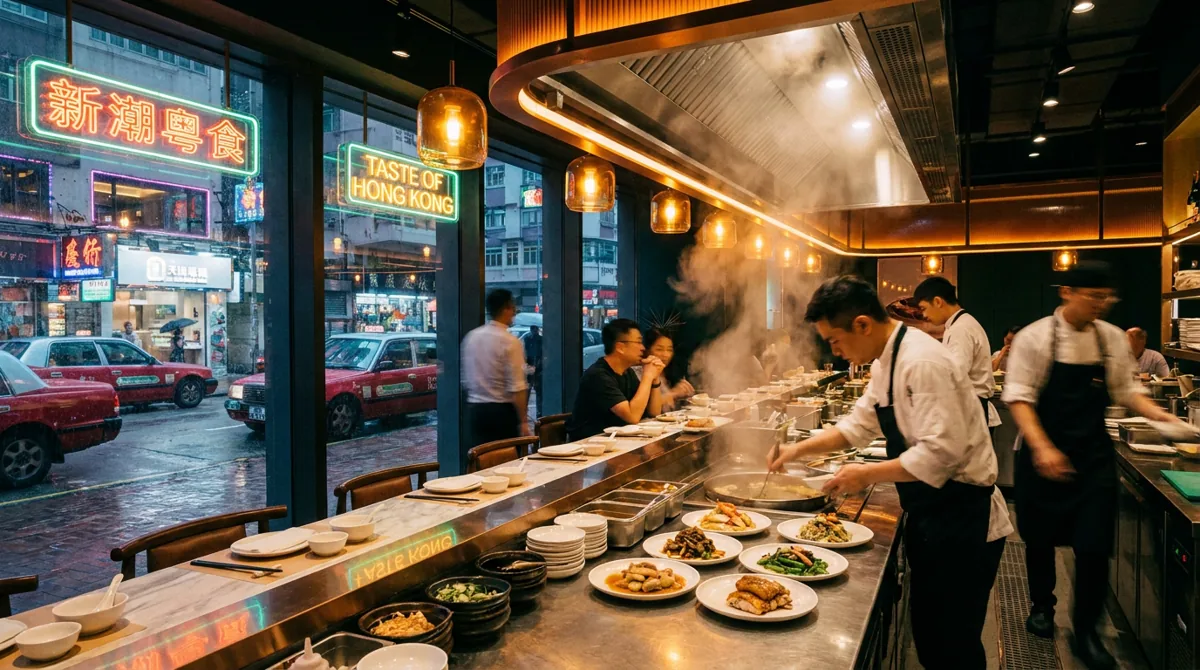
Illustration: Yum Cha Now, AI-generated. It sets the scene and is not a photograph of the venue.
Everyone assumes dim sum belongs to the restaurant: the trolleys, the bamboo baskets, the chefs with decades of practice. And some of it does. But two of the great classics, siu mai and har gow, are genuinely makeable at home, and steaming your own first basket is one of the most satisfying things a home cook can do.
Here are my recipes for both, an easy one and a rewarding challenge, so you can bring yum cha into your own kitchen.
Bringing yum cha home
Few rituals are more Hong Kong than yum cha: a long, lazy brunch of tea and dim sum, baskets stacking up across the table. Most people assume dim sum is strictly restaurant territory, and a few items genuinely are. But two of the great classics are well within reach at home: siu mai, the open-topped pork-and-prawn dumplings, which are genuinely easy, and har gow, the elegant crystal prawn dumplings, which are a rewarding step up once you master the translucent wrapper.
Make both and you have the heart of a dim sum spread. Here are my recipes for each.
Siu mai (pork & prawn dumplings)
Start here: siu mai are forgiving and quick, with no wrapper to make from scratch (shop-bought thin yellow dumpling/wonton wrappers work perfectly).
- Filling: 250 g minced pork (not too lean), 100 g raw prawns (roughly chopped), 4 dried shiitake (soaked and finely diced), 1 tsp grated ginger, 1 chopped spring onion
- Seasoning: 1 tbsp light soy, 1 tsp sesame oil, 1 tsp sugar, 1 tsp cornflour, a pinch of white pepper, 1 tbsp of the mushroom soaking water
- Round yellow dumpling/wonton wrappers; a little grated carrot or roe to garnish
- Mix the filling and seasoning in one direction until sticky and well combined; chill 20 minutes.
- Place a spoon of filling in the centre of a wrapper. Cup your hand and gently gather the wrapper up around the filling, leaving the top open, pressing to form an open-topped 'basket'. Flatten the base so it stands. Tap a little carrot or roe on top.
- Steam over rapidly boiling water, spaced apart on lined or oiled steamer trays, for 7–8 minutes until cooked through. Serve hot with chilli oil and soy.
Har gow (crystal prawn dumplings)
The famous see-through skin comes from wheat and tapioca starch and boiling water: the dough is worked hot, so handle carefully.
- Wrapper: 100 g wheat starch, 30 g tapioca starch, a pinch of salt, about 160 ml boiling water, 1 tsp oil
- Filling: 250 g prawns (half roughly chopped, half minced for texture), 1 tsp sesame oil, 1 tsp sugar, ½ tsp salt, 1 tsp cornflour, a pinch of white pepper, a little finely chopped bamboo shoot if you have it
- Mix the filling and chill while you make the dough.
- Combine the wheat and tapioca starch and salt. Pour in the boiling water all at once, stirring fast, then cover 2 minutes. Add the oil and knead the warm dough until smooth; keep it covered so it doesn't dry out.
- Roll small balls thin (a lightly oiled flat blade or a press helps) into rounds. Add filling, then pleat one side and fold over to seal into the classic ridged half-moon.
- Steam 6–8 minutes until the wrappers turn glossy and translucent and the prawns are pink. Eat immediately. They are best straight from the steamer.
Tips for a home yum cha
A few things make a home dim sum session work. Steam in batches and eat as you go, hot from the basket, rather than trying to time everything at once. Line your steamer with perforated paper or a thin smear of oil so nothing sticks. Don't overfill: neat, modest dumplings hold together far better than bulging ones. And make the filling sticky by mixing in one direction, which gives that signature springy bite.
Round it out with shop-bought BBQ pork buns or spring rolls if you like, brew a pot of jasmine or pu-erh, set out chilli oil and soy, and you have a proper yum cha at home. For the real thing on a Sunday, see our best dim sum guide, and then come home and try to beat it.