Illustration: Yum Cha Now, AI-generated. It sets the scene and is not a photograph of the venue.
Hong Kong has spent a decade arguing about ramen. Meanwhile, udon has quietly become the more interesting noodle in town (and Daichi no Udon: 大地烏冬專門店), the Fukuoka specialist tucked inside Olympian City in Tai Kok Tsui, is the clearest argument for it. Its noodles are famously semi-transparent: soft-edged, almost translucent, and nothing like the chewy Sanuki style most local shops serve. Here is what to know before you go, including the timing trap almost every listing gets wrong.
In This Guide
What makes the noodles different?
Most udon you eat in Hong Kong is Sanuki: the Kagawa style, prized for a firm, springy bite. Daichi no Udon comes from a different tradition entirely.
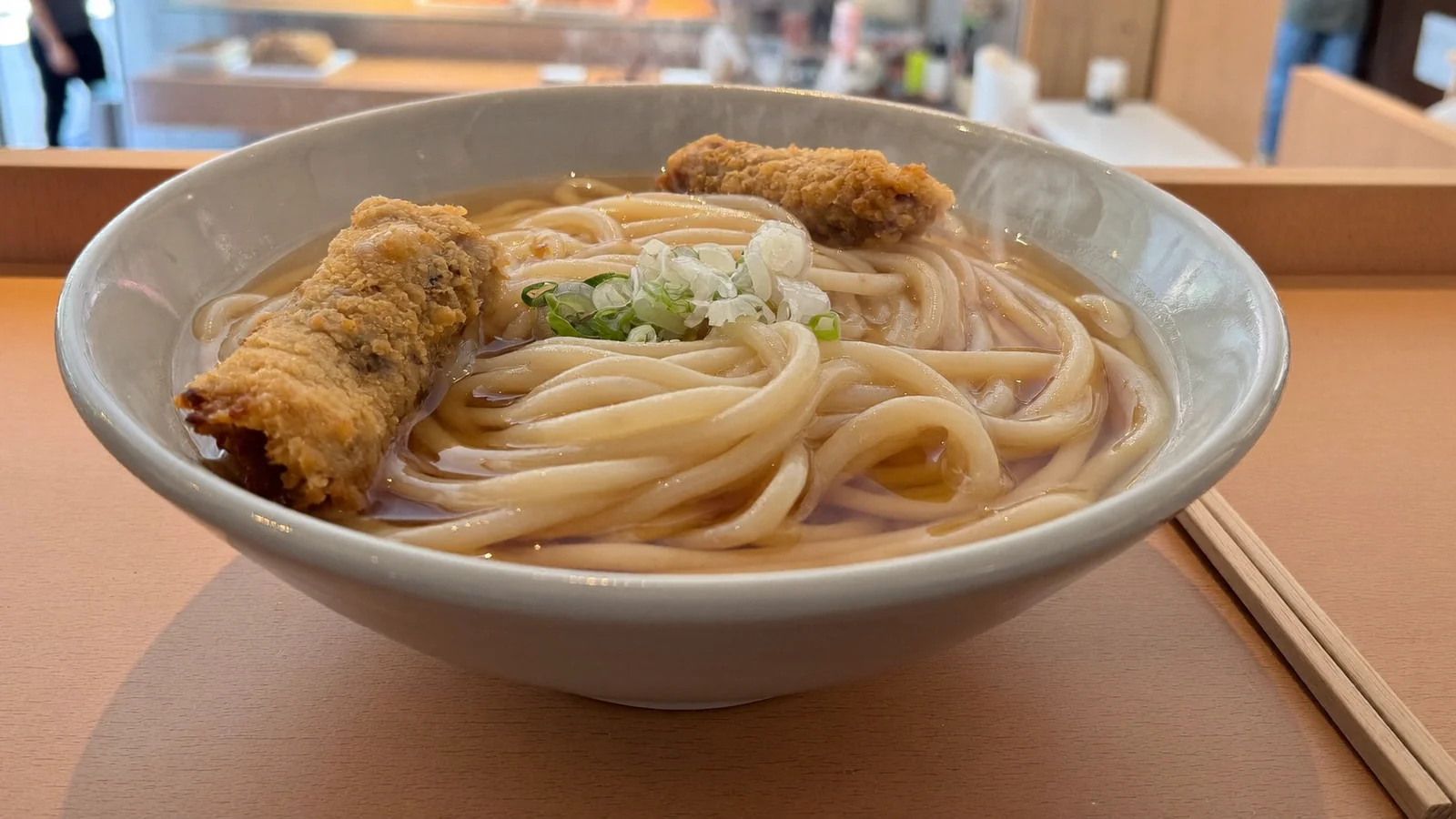
The restaurant is a member of the Buzen Urauchi Kai, a Fukuoka association of udon makers, and the house style is a softer, semi-transparent noodle. The translucency is the tell: it comes from a long, slow process the restaurant puts at roughly 20 hours of fermentation and ageing, which it says is adjusted daily for Hong Kong's humidity. Noodles are cut and boiled only once you order.
That is the practical consequence worth knowing: nothing is sitting in a warmer. Bowls come out when they come out, so this is not the place for a 20-minute lunch break. If you want the firmer, chewier end of the spectrum, our guide to the best ramen in Hong Kong and the wider best Japanese restaurants round-up cover the alternatives.
What to order
The signature is the hot udon with beef and burdock tempura, and the burdock is the reason it travels. It arrives as a large, windmill-shaped tangle of tempura that is engineered to stay crisp even half-submerged in broth: a small piece of theatre that also happens to taste good.
There is also a Hong Kong-exclusive mentaiko butter udon with raw egg, which is the richer, saucier counterpoint to the clean broth bowls. Between them you get a fair read on the kitchen.
On Prices
The beef and burdock tempura udon was listed at HK$93 when the restaurant opened in January 2026. That figure is now six months old, and we have not been able to confirm a current menu price against a primary source, so treat it as a guide to the price bracket, not today's number. Expect a casual, sub-HK$150 lunch rather than a splurge. The launch promotions (a lucky draw and special opening prices) ran only to 8 February 2026 and have long since ended, despite still circulating online.
Hours, and the 4pm trap
This is the bit worth reading twice. Nearly every listing, including the press coverage from the opening, gives Daichi no Udon's hours as a flat 11am to 10pm, daily. That is incomplete.
Olympian City's own shop page, the most authoritative source available, lists something more specific:
| Detail | What the mall actually lists |
|---|---|
| Days | Monday to Sunday |
| Service | 11:00am – 10:00pm |
| Afternoon break | 4:00pm – 5:30pm (closed) |
| Last order | 9:30pm |
So the real shape of the day is 11am–4pm, then 5.30pm–10pm. Turn up at 4.30pm on the strength of a "daily 11am–10pm" listing and you will find the shutters down, which, given Tai Kok Tsui is a deliberate trip for most people, is a wasted journey. Roll in at 9.40pm and you are past last orders.
Where it is and how to get there
Olympian City 2 sits directly above MTR Olympic station on the Tung Chung Line, which makes this one of the easier "destination" meals in Kowloon. The mall's own transport page names the station but does not publish an exit letter, so we are not going to invent one: follow the signposted walkways for Olympian City from the concourse.
For distance-hedging: the mall quotes journey times of roughly 14 minutes from Central and 13 minutes from Hung Hom or West Kowloon. Full details are on Olympian City's transport page, and the shop's listing sits on the mall's dining directory.
Daichi no Udon: The Essentials
Hours, floor and phone verified against Olympian City's own English and Traditional Chinese shop listings. Menu prices date from the January 2026 opening coverage: confirm in store.
Is it worth the trip to Tai Kok Tsui?
Honest answer: it depends what you are after. If you want udon as a quick, cheap refuel, your local Marugame does that job and there is one nearer than Tai Kok Tsui.
If you actually care about noodle texture, if the difference between a firm Sanuki bite and a soft Fukuoka one is a thing you would happily argue about, then yes, this is a specialist doing one thing properly, and Hong Kong has very few of them. The made-to-order rule means you are eating the noodle at its best, which is more than most bowls in this city can claim.
It is also a genuinely good pairing with a shopping run. Olympian City is a full-sized mall, so you can build an afternoon around it: see our guide to Hong Kong's best shopping malls. And if you are working through the city's Japanese specialists, Manmaru's unagi in Tuen Mun is the other recent Japanese first-outpost worth the journey.
Frequently Asked Questions
Go Between the Rushes
Everything is cut and boiled to order, so the queue moves slowly at 1pm. Aim for 11.30am or just after 5.30pm, and check the break time before you travel.