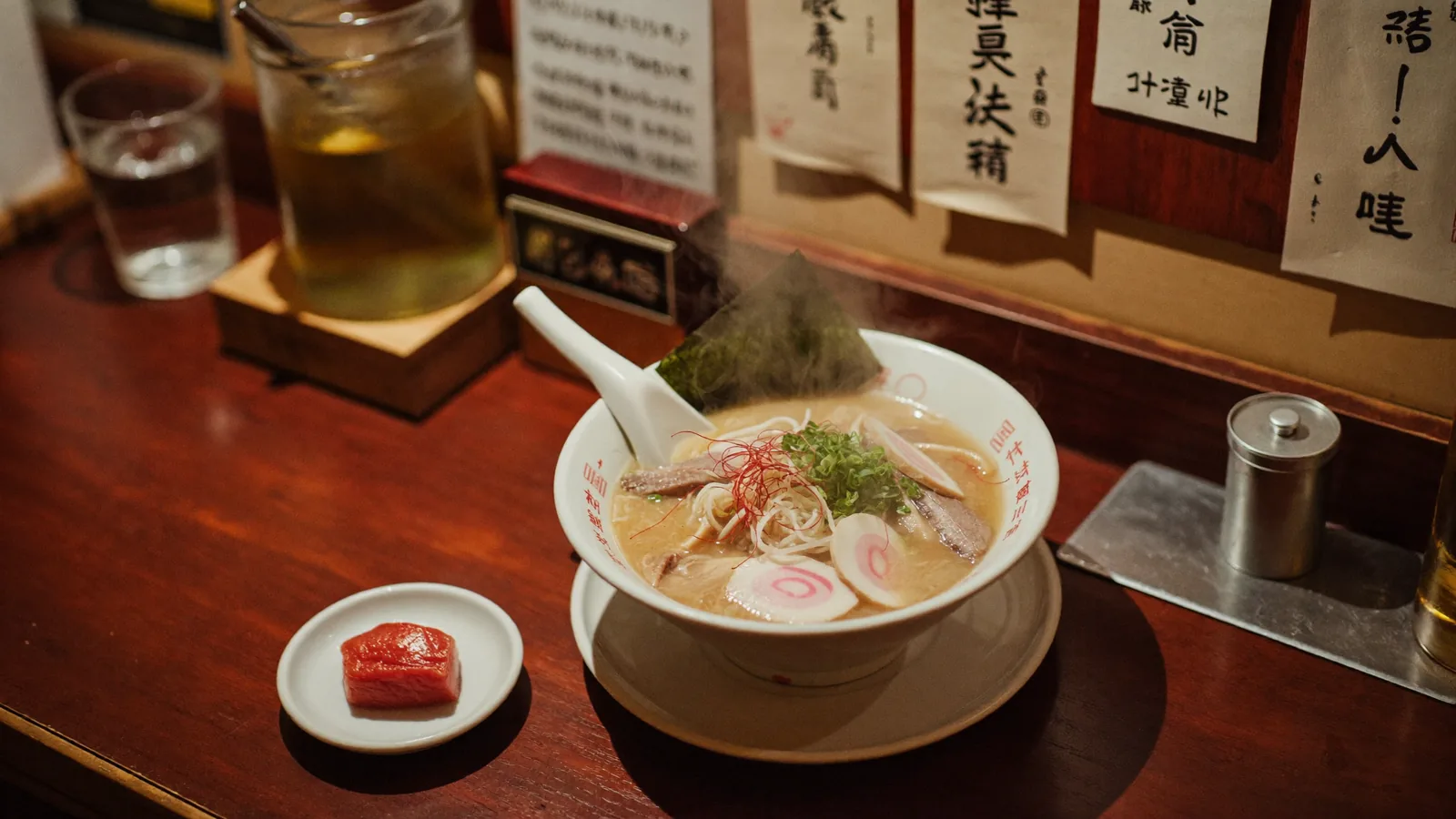
Illustration: Yum Cha Now, AI-generated. It sets the scene and is not a photograph of the venue.
Hong Kong takes its noodles seriously, and somewhere along the way the city fell hard for Japan's. Walk any dense stretch of Central, Causeway Bay or Tsim Sha Tsui at 1pm and you'll find a queue curling out of a ramen counter, everyone waiting on the same thing: a bowl of broth so good it makes the wait feel reasonable.
This is my guide to the best ramen in Hong Kong right now: seven counters worth the queue in 2026, sorted by broth so you can chase exactly the bowl you're after. Every address, price and detail below was checked against venue menus and current listings in July 2026. Ramen shops move and prices creep, so confirm before you build a lunch around one.
In This Guide
A quick map of ramen styles
Ramen is really a family of regional bowls, and knowing five of them makes any menu easier to read. Tonkotsu is the thick, milky pork-bone broth from Hakata: the style Hong Kong loves most. Shio (salt) keeps a chicken broth clear and golden; shoyu (soy) is a touch darker and sweeter. Miso is nutty and hearty, born in Hokkaido's cold. And tsukemen serves the noodles and a concentrated dipping broth separately, for you to dunk.
The rule of thumb: thin, straight noodles suit lighter broths, and thick, wavy noodles hold onto heavier ones. Beyond that, trust your appetite. If you want the full spread of Japanese dining in the city, our guide to the best Japanese restaurants in Hong Kong picks up where the ramen counters leave off.
Tonkotsu: the rich pork-bone classics
Butao Ramen (豚王): the Central benchmark
Butao is the shop that taught a generation of Hong Kongers to queue for ramen. The King Tonkotsu is the move: a collagen-rich, glossy pork broth that reads as deeply savoury rather than heavy, with thin Hakata noodles and a chalkboard of specials (the spicy Red King and garlicky Black King among them). It's counter seating, cash-friendly and fast: join the line on Wellington Street and you'll be slurping within the half-hour. See our Butao venue guide for the full picture.
Kamitora Tonkotsu (神虎): the seared pork-belly special
Kamitora's broth is the slow-cooked kind, rich and creamy with the depth only hours of simmering pork bone deliver. The standard bowl is good; the upgrade is the reason to come. The Kamitora ramen special (HK$140) crowns the bowl with a thick, seared and caramelised slab of pork belly that half-melts into the soup. It's a Wan Chai favourite, with a second branch across the harbour in Tai Kok Tsui.
Ichiran (一蘭): tonkotsu in a solo booth
Ichiran turned eating alone into a selling point. You order by paper form (broth richness, noodle firmness, spice level, all customised) then slurp your natural tonkotsu in a wooden focus booth with a curtain in front of you. The first Hong Kong branch, in Causeway Bay, was the chain's first-ever store outside Japan when it opened in 2013; there's a second in Tsim Sha Tsui. It's not cheap for what it is, but the ritual is the point.
Shio & shoyu: the clean bowls
GOGYO (五行): delicate shio, or a bowl set on fire
Down in the basement of Landmark Alexandra, GOGYO offers two very different experiences. The tanrei shio ramen (HK$108) is the light one: a clear, gently sweet chicken-salt broth topped with onion, spring onion, menma and tender pork, and a refreshing change from the city's tonkotsu default. The showpiece, though, is the kogashi (burnt) ramen, where miso or soy is charred in a searing-hot pan until the whole bowl smokes. Come for the theatre, stay for the balance.
Ramenya Shima (ラーメン家 島) — 60 bowls a day
The most talked-about ramen arrival of 2026, Ramenya Shima brought its Tokyo cult to Causeway Bay for its first venture outside Japan. The Shibuya original, founded in 2020, serves just 60 bowls a day of light, clean tanrei-style ramen, and the Hong Kong shop keeps the discipline. The ultimate ramen (HK$158) layers a shoyu broth built from around 30 ingredients, artisanal noodles blended from five flours, and slow-cooked char siu with handmade wonton. Go early; when the bowls run out, they run out. We covered the opening in full in our Ramenya Shima first-look.
Miso & tsukemen, for something different
Kikanbo (鬼金棒): the city's spiciest bowl
A Tokyo import that debuted in Causeway Bay in 2019, Kikanbo built its name on the karashibi miso ramen (from HK$95): "karashibi" being the double hit of chilli heat and tongue-numbing sansho pepper. You choose your level of each, from none to the notorious ONI level (+HK$15), which brings Carolina Reaper into a robust miso broth slow-cooked with pork and chicken bones. Sensible diners sit in the middle; the demon-club branding tells you what the kitchen thinks of them. Branches now stretch to Central and Tsim Sha Tsui.
Shugetsu Ramen: the Michelin-listed dip
On the corner of Gough Street, Shugetsu has held a Michelin Bib Gourmand for years: the guide's nod to great value. Its tsukemen (HK$116) serves thick, chewy in-house noodles alongside a concentrated dipping broth built on soy sauce fermented for 18 months in a century-old wooden barrel, with sardine and mackerel powder giving it a smoky depth. Dunk, slurp, repeat; the noodles are the star. It's one of the more reliably excellent bowls in the whole Hong Kong comfort-food canon.
Which Hong Kong ramen is worth queuing for?
If you only have one lunch, match it to your mood. First time, or feeding a sceptic? Butao: the tonkotsu is a crowd-pleaser and the queue moves. Chasing a refined, once-in-a-while bowl? Ramenya Shima, and get there before the 60 sell out. Want a show? GOGYO's burnt ramen. Craving pain? Kikanbo. And for the safest bet in the guide, Shugetsu's Bib Gourmand tsukemen rarely misses.
Prices across the board sit in the HK$95–160 range for a standard bowl, which makes ramen one of the best-value proper meals in town: a theme we return to often, from Cantonese classics to the city's noodle institutions. Add an egg and some char siu and you've eaten well for well under HK$200.
The cheat sheet
Best ramen in Hong Kong at a glance (checked July 2026)
| Shop | Area | Style | Signature bowl | MTR |
|---|---|---|---|---|
| Butao (豚王) | Central | Tonkotsu | King Tonkotsu ~HK$95–120 | Central |
| Kamitora (神虎) | Wan Chai | Tonkotsu | Kamitora special HK$140 | Wan Chai |
| Ichiran (一蘭) | Causeway Bay / TST | Tonkotsu | Natural tonkotsu from ~HK$118 | Causeway Bay |
| GOGYO (五行) | Central | Shio | Tanrei shio HK$108 | Central |
| Ramenya Shima | Causeway Bay | Shoyu | Ultimate ramen HK$158 | Causeway Bay |
| Kikanbo (鬼金棒) | Causeway Bay | Spicy miso | Karashibi miso from HK$95 | Causeway Bay |
| Shugetsu | Central | Tsukemen | Tsukemen HK$116 | Sheung Wan |
One last tip: most of these counters are busiest 12–2pm and 7–9pm. Slide in just before or after and you'll trade the queue for a calmer bowl. For more on the Japanese wave reshaping the city's tables, from omakase to izakaya, the Japanese restaurants guide is your next read. External appetite for more? The Michelin Guide's Hong Kong ramen list and Foodie's style-by-style breakdown are both worth a scroll.