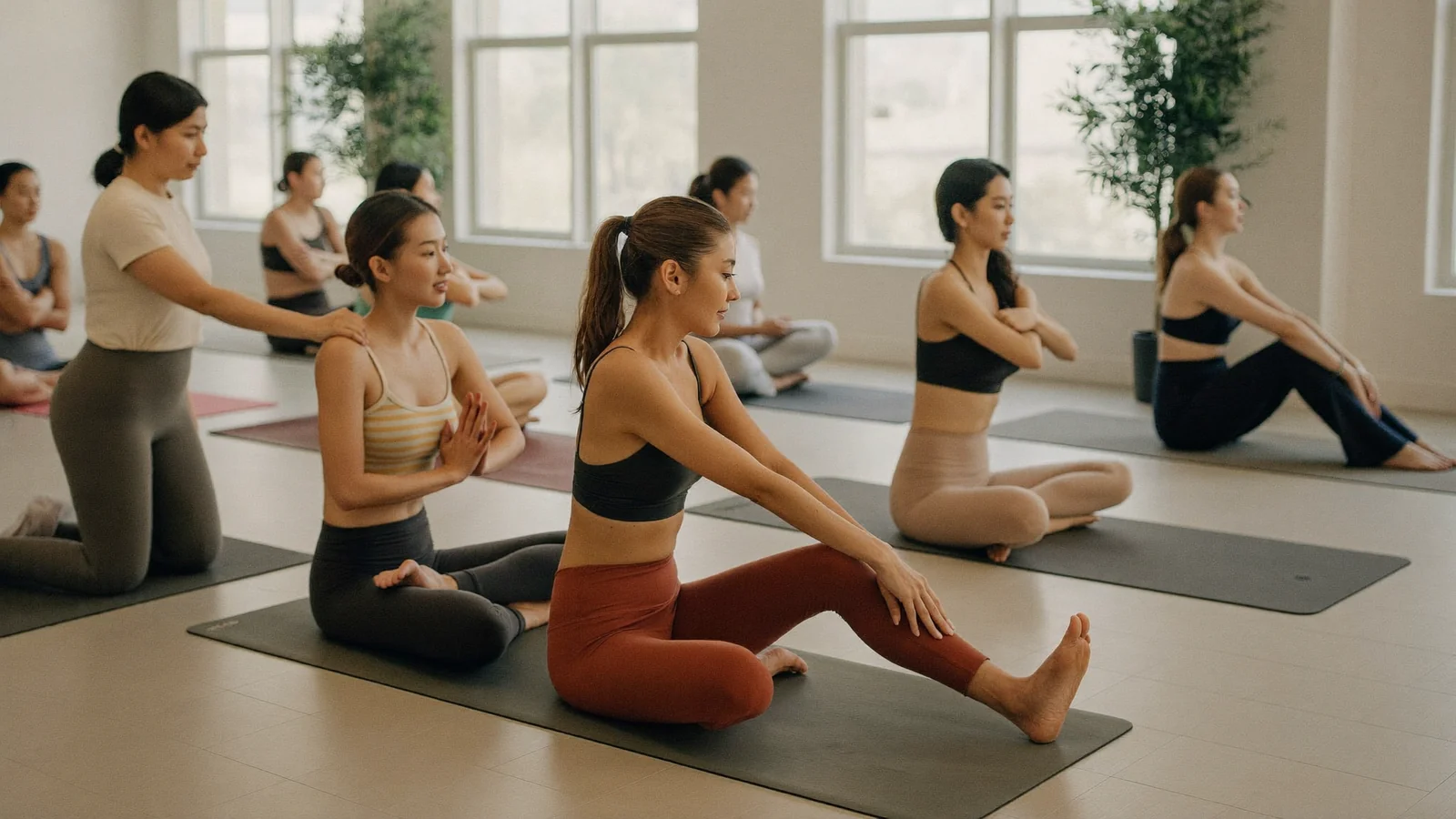
Illustration: Yum Cha Now, AI-generated. It sets the scene and is not a photograph of the venue.
Few cities move as fast as Hong Kong, which is exactly why its yoga studios are thriving. From a hushed therapy room above Lan Kwai Fong to a light-filled space overlooking Wong Chuk Hang, the city has a mat for every mood — hot flows, restorative yin, aerial, prenatal and more. This 2026 guide rounds up four of the best yoga studios in Hong Kong, with what each is known for, where they are and the nearest MTR.
In This Guide
Where are the best yoga studios in Hong Kong?
The four studios below were all open and running classes in 2026. They span the big, polished chain and the small, personal studio, so whether you want 40 classes a day or a quiet room with six people in it, there is something here. Class prices move, so check each studio's latest schedule and intro offer before you book.
1. Pure Yoga (Pure瑜伽)
The heavyweight of Hong Kong yoga, Pure Yoga runs a network of studios across the city — Central, Admiralty, Causeway Bay and Tsim Sha Tsui among them — with a vast daily timetable spanning hatha, vinyasa, hot yoga and restorative classes. Facilities are premium (showers, towels, lockers) and the teacher roster is deep. Best for people who want choice, polish and a class whatever their schedule.
2. Anahata Yoga (安納哈達瑜伽)
A spacious, calming studio high above Central, Anahata Yoga leans into the therapeutic and the traditional. Its signature Yoga Therapy series targets specific needs of city dwellers — back care, de-stress, better sleep — alongside classic Hatha and Sivananda classes. Teachers are highly qualified, and the pace is gentler than a hot-flow chain. Ideal if you want yoga as genuine recovery.
3. The Yoga Room
Tucked across several floors of a Sheung Wan walk-up, The Yoga Room keeps classes small so teachers can give real attention to every student. The line-up runs from dynamic vinyasa to restful yin and candlelight yin, and the studio also hosts retreats in Thailand and Indonesia. It is the antidote to a packed chain class — warm, unhurried and genuinely local.
4. Flex Studio
One of Hong Kong's most trusted premium studios, Flex Studio pairs a broad yoga programme — power, hatha and yogalates — with a full Pilates offering, all under one roof. The airy Wong Chuk Hang space is a favourite on the South Side, while the Central studio suits a lunchtime reset. Best if you want to mix your mat work with core and strength training.
The four studios at a glance
Hong Kong yoga studios compared
| Studio | Area | Known for | Best for |
|---|---|---|---|
| Pure Yoga | Citywide | Huge timetable, hot yoga | Variety and facilities |
| Anahata Yoga | Central | Yoga therapy, traditional | Recovery and back care |
| The Yoga Room | Sheung Wan | Small classes, yin | A personal class |
| Flex Studio | Central / WCH | Yoga plus Pilates | Strength and toning |
*Locations and prices are approximate and change; verified where published, July 2026. Always check the studio's own schedule before booking.
How do you choose a yoga studio in Hong Kong?
The right studio depends on your style, budget and how far you will travel. Here is how to narrow it down.
Match the style to your goal
Want to sweat and build strength? Try hot yoga or power flow at Pure or Flex. After stress relief or injury recovery? A therapeutic or yin class at Anahata or The Yoga Room is gentler. Most studios label classes by level, so beginners can start with a foundations or basics class.
Know the cost
A single drop-in typically runs HK$180 to HK$300, with class packs and monthly memberships bringing the per-class price down. Nearly every studio offers a discounted intro offer for new students — a smart, low-risk way to try before you commit.
Think about location and pace
Pick a studio near work or home so you actually go. If you like buzz and choice, a big chain suits; if you prefer calm and familiar faces, a small studio wins. After class, keep the wellness going with a top Hong Kong spa or a session at one of the best hotel pools.
Want to move more? Balance your mat time with the outdoors. Explore Hong Kong's best running routes, its best hikes, and the city's best climbing gyms for your next active fix.
Frequently Asked Questions
Roll out your mat
Pick a studio, grab an intro offer and breathe. The best yoga studios in Hong Kong are how the city slows down — find the one that fits your pace.