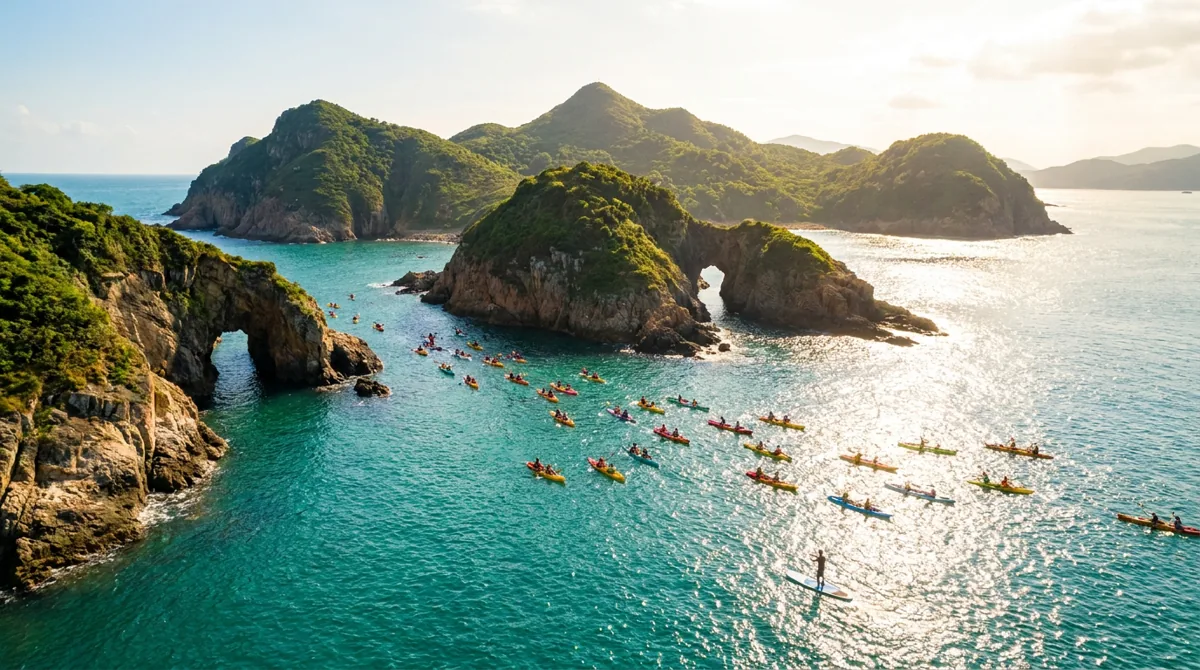
Illustration: Yum Cha Now, AI-generated. It sets the scene and is not a photograph of the venue.
People think of Hong Kong as a vertical city of glass towers, and they're not wrong. But there's a second Hong Kong that the skyline hides: a sprawling coastline of more than 260 islands, hidden bays, volcanic sea arches and surprisingly good surf, almost all of it reachable by a short ferry or minibus from the centre of town. For anyone willing to swap pavement for paddle, the best watersports in Hong Kong are some of the most underrated outdoor experiences in the region.
You can kayak past 140-million-year-old rock formations in a UNESCO geopark, catch a wave a 30-minute bus ride from the MTR, or learn to stand-up paddleboard on a glassy bay before lunch. Below is my verified guide to the best watersports in Hong Kong in 2026, with operators, how to get there, and what it costs.
In This Guide
Which Watersport Is Right for You?
Start with honesty about your appetite for effort. Stand-up paddleboarding is the gentlest way in: ten minutes of wobbling and most people are upright and gliding. Sea kayaking asks a bit more of your shoulders but rewards you with serious range. It's the only way to reach Sai Kung's best sea arches and caves up close. Surfing is the steep one; Hong Kong's modest waves make it forgiving for learners, but you'll still want a lesson.
Geography matters too. Sai Kung in the eastern New Territories is the crown jewel for kayaking. Hong Kong Island's south coast (Stanley, Big Wave Bay) is closest to town. Lantau's Cheung Sha is the long-beach windsurf and kite spot. Pick the sport, and the location tends to pick itself.
The Best Watersports in Hong Kong 2026
Kayaking the Sai Kung Geopark: Kayarine 西貢
For self-guided paddling, Kayarine is the easy choice. Their pickup point is a short walk from Sai Kung Waterfront Park, and they rent single and tandem kayaks plus SUPs, with guided trips out to Sharp Island (Kiu Tsui Chau) and Pak Sha Chau on offer too. Sharp Island is the headline destination, at low tide a natural sand tombolo (a causeway) appears, letting you almost walk to a neighbouring islet, and the volcanic rock here is part of the UNESCO Global Geopark. It's flat, sheltered water, which makes it ideal for first-timers and families. Pack reef shoes and plenty of water.
Guided Geopark Sea-Arch Kayaking: Wild Hong Kong
The most spectacular kayaking in Hong Kong is also the most committing, and that's where a guide earns their fee. Wild Hong Kong runs guided geopark tours ranging from beginner-friendly paddles to advanced sea-arch routes through the columnar volcanic rock of the eastern geopark. The advanced trips take you right up to caves and arches carved into 140-million-year-old hexagonal rhyolite columns: genuinely jaw-dropping, and not somewhere to venture without someone who knows the tides and the swell. They also run Hoi Ha trips through a sheltered marine park. Book ahead; group sizes are capped.
Surfing at Big Wave Bay 大浪灣
Big Wave Bay, just past Shek O on the south-east corner of Hong Kong Island, is where most people in the city learn to surf. It's a friendly beach break, and crucially it has the infrastructure: walk-in board and wetsuit rental, lockers, hot showers and food right by the sand, with rental shops open through the day. The waves are best from late summer into autumn, when typhoon swells push in from the South China Sea; in flat spells it's more of a paddle-and-pose. Conditions are modest by global standards, which makes it forgiving for first-timers. A genuinely fun, accessible day out.
SUP & Windsurfing at Stanley: HK Aqua-Bound Centre 赤柱
Stanley Main Beach has deep windsurfing roots. This stretch of the south coast is where Hong Kong's Olympic windsurfing heritage was forged. The HK Aqua-Bound Centre, right on the beach, runs windsurfing, kayaking, wakeboarding and SUP, with lessons and rentals for all levels. The bay is sheltered enough for a calm SUP session and breezy enough for windsurfing when the wind's up, which makes it a versatile spot. Pair a morning on the water with Stanley Market and the waterfront for a complete south-side day. Closes around 6pm, so start early.
Windsurf, SUP & Kite at Cheung Sha: Long Coast Seasports 長沙
Cheung Sha is Hong Kong's longest beach, a sweeping arc of sand on the south coast of Lantau, and Long Coast Seasports has been the resident watersports operator there since 2004. They run kayaking, windsurfing, SUP, bodyboarding and kiteboarding, and, uniquely, offer glamping right on the beach, so you can turn a paddle session into an overnight escape. In 2026 they've partnered with the Hong Kong Surf Kite & Wake Association to host watersports camps. The wide-open beach and steadier wind make this the spot for windsurf and kite progression. It feels a world away from the city, which is rather the point.
Sea Kayaking from Lamma: Sea Kayak Hong Kong 南丫島
For a different flavour of paddling, head to car-free Lamma Island. Sea Kayak Hong Kong is based at Sok Kwu Wan, the island's southern fishing village, and offers sea kayaking that takes in Lamma's quiet coves and coastline. It's a lovely contrast to Sai Kung: slower, more pastoral, and bookended by a ferry ride and a famous Lamma seafood lunch at Sok Kwu Wan's waterfront restaurants. The crossing from Central is part of the appeal, turning the day into a proper mini-expedition. Book in advance and check ferry times so you don't miss the last boat home.
Quick Comparison Table
Watersports at a Glance
| Spot / Operator | Area | Best Sport | Level |
|---|---|---|---|
| Kayarine | Sai Kung | Kayak / SUP rental | Beginner+ |
| Wild Hong Kong | Sai Kung | Guided geopark kayaking | Beginner–Advanced |
| Big Wave Bay | HK Island | Surfing | Beginner+ |
| HK Aqua-Bound Centre | Stanley | Windsurf / SUP | All levels |
| Long Coast Seasports | Cheung Sha, Lantau | Windsurf / kite / SUP | All levels |
| Sea Kayak Hong Kong | Lamma Island | Sea kayaking | Beginner+ |
Safety & Practical Tips
Check the weather and typhoon signals first. Hong Kong's weather turns fast. The Hong Kong Observatory publishes warnings, and any responsible operator will cancel when conditions are unsafe. Never paddle out under a strong-wind warning.
Mind the tides. Sai Kung's sea arches and Sharp Island's tombolo are tide-dependent. Plan around the tide tables, or go guided so someone else does the planning for you.
Sun and water. The subtropical sun is fierce on the open water. Reef-safe sunscreen, a rash vest, a hat and far more water than you think you need are non-negotiable.
Go guided for the hard stuff. Self-guided rental is perfect for sheltered bays. But the geopark sea arches, open crossings and surf in real swell deserve an operator who knows the conditions. It's the difference between a great day and a rescue story.
Watersports pair naturally with the rest of Hong Kong's coast. Make a weekend of it with our guides to the secret beaches near Hong Kong and what to do on a Hong Kong long weekend, and if you'd rather watch sport than do it, our Happy Valley horse racing guide and where to watch live football have the indoor afternoons covered.
Frequently Asked Questions
Get on the Water
From geopark sea arches to Big Wave Bay surf, YumChaNow has Hong Kong's great outdoors covered. Subscribe for weekly beach, hike and watersports ideas.