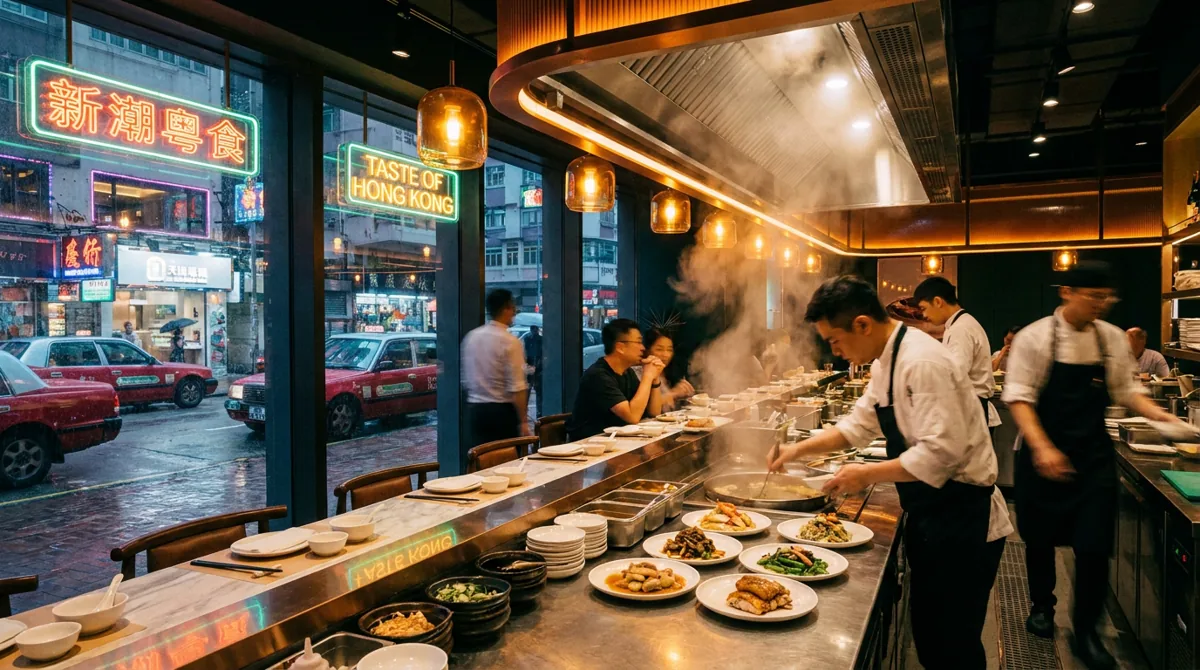
Illustration: Yum Cha Now, AI-generated. It sets the scene and is not a photograph of the venue.
For all its Michelin stars and sky-high tasting menus, the truest taste of Hong Kong is found standing on a noisy street corner, a bamboo skewer of curry fish balls in one hand and a warm egg waffle in the other, for the price of a coffee. Street food is the city's edible heartbeat: cheap, fast, unpretentious and absolutely delicious.
This is your guide to grazing Hong Kong's streets: what to eat, where to find it, and how to do it like a local.
In This Guide
The street-snack canon: what to eat
Start with the greatest hits. The egg waffle (gai daan jai, 'little eggs') is the city's most famous street sweet — a sheet of crisp-shelled, soft-centred batter spheres, eaten warm from a paper bag. Curry fish balls on a bamboo skewer, bobbing in a pot of curry sauce, are the savoury equivalent, beloved by generations of schoolkids. Siu mai — the street version, soft pork-and-fish dumplings drenched in soy and chilli oil — and cheung fun, silky rice rolls scissored up and dressed with sweet sauce, hoisin and sesame, complete the everyday quartet.
From there, get adventurous: stinky tofu (chau dau fu, fermented and deep-fried, better than it smells), beef offal (ngau jaap, simmered and snipped to order), grilled squid and sausages, put chai ko (steamed red-bean rice puddings), chestnuts and roasted sweet potatoes in winter, and the humble pineapple bun and egg tart from the corner bakery.
How to eat street food like a local
There is a rhythm to it. Follow the queue: Hongkongers will happily line up for the good stall and ignore the empty one beside it, and you should too. Carry cash in small denominations; most stalls don't take cards. Eat it where you buy it, hot and immediate, rather than carting it around. And graze: the joy is in trying many things in small amounts as you walk, not committing to one big plate.
Pointing works fine if your Cantonese doesn't stretch to the menu, and the vendors are used to curious eaters. Half the pleasure is the theatre: the clang of the waffle iron, the scissors snipping cheung fun, the steam and the crowd.
Street food through the seasons & the day
The street-food scene shifts with the clock and the calendar. Mornings bring cheung fun, congee and breakfast pastries; afternoons are prime fish-ball-and-waffle grazing; and the stalls come alive again after dark, especially around the night markets. Winter adds roasted chestnuts and sweet potatoes and steaming bowls of offal; the sticky summer pushes everyone toward cold tofu pudding, grass jelly and iced drinks.
It pairs perfectly with the rest of a Hong Kong wander: a few skewers between shops, a waffle on the walk to the MTR. For the sit-down cousin of street food, see our dai pai dong guide; for the markets where much of it lives, our markets guide.
Why it matters
Street food is the most democratic, most honest version of Hong Kong eating: cheap, fast, unpretentious and woven into daily life. It is also, quietly, under pressure: rising rents, licensing rules and redevelopment have thinned the ranks of street vendors over the years, which makes seeking out the great ones feel a little urgent.
So eat widely and eat often. A HKD 20 cup of curry fish balls, snipped fresh and eaten on a noisy Mong Kok corner, tells you more about this city than almost any restaurant meal.