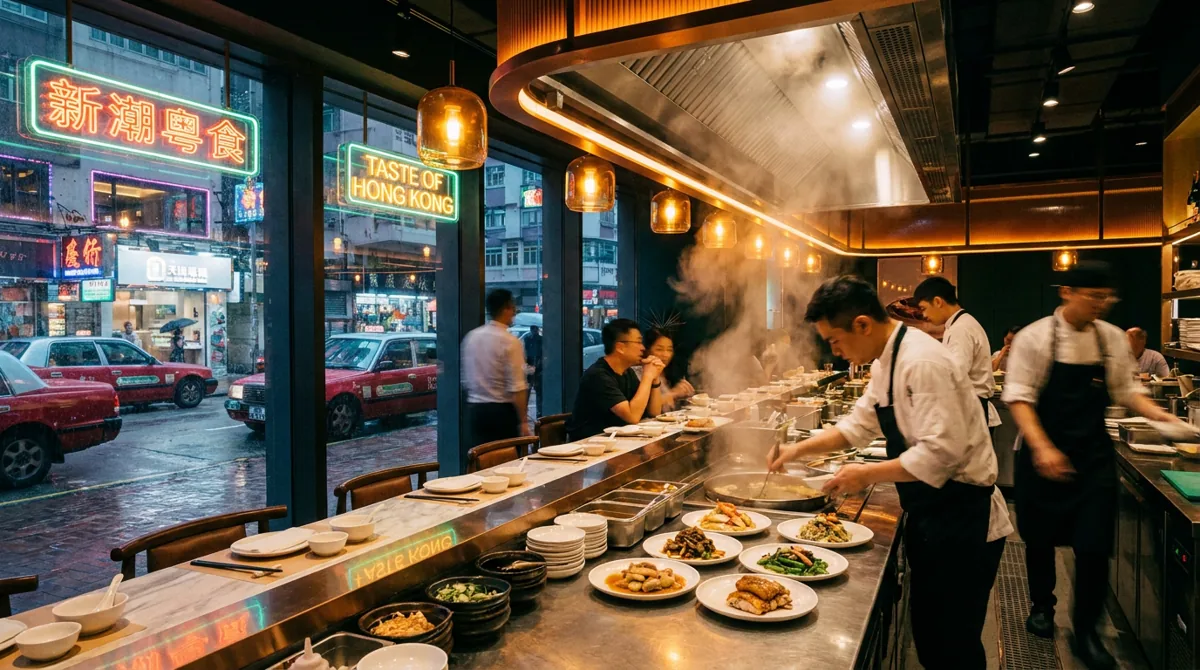
Illustration: Yum Cha Now, AI-generated. It sets the scene and is not a photograph of the venue.
Hong Kong's market culture, surviving among shopping malls and supermarkets, represents authentic local commerce where generations of vendors have operated single stalls, prices negotiate, and character emerges from daily human transaction. The best markets transcend shopping; they're cultural institutions revealing how Hong Kong actually lives, eats, and dresses.
Fashion & Accessories Markets
Ladies' Market 女人街
Stretching along Tung Choi Street in Mong Kok, Ladies' Market is Hong Kong's quintessential bargain fashion strip: roughly 100 stalls selling women's clothing, accessories, handbags, belts, shoes, and costume jewellery at prices that invite negotiation. It's chaotic, colourful, and completely addictive. The name comes from its historical focus on women's fashion, though today everyone shops here.
Bargaining tip: For multiple items from the same stall, 10–15% off is easily achievable. Start lower, be friendly, and be prepared to walk away. It usually works.
Temple Street Night Market 廟街夜市
Temple Street comes alive after dark: the stalls stretching from Kansu Street south toward Tin Hau Temple sell everything from vintage watches and phone accessories to jade, opera music blaring from speakers, and fortune tellers working under bare bulbs. It's one of the most evocative evening experiences Hong Kong offers, and it costs nothing to wander.
Li Yuen Street East & West 利源東西街
Two parallel covered pedestrian lanes in the heart of Central, packed with fashion, accessories, casual clothing, and handbags at prices dramatically lower than the neighbouring boutiques. The covered structure makes it year-round shopping regardless of Hong Kong's unpredictable weather. It's compact, tactile, and unexpectedly great value given the prime Central location.
Electronics & Tech Markets
Sai Yeung Choi Street South 西洋菜南街
The pedestrianised stretch of Sai Yeung Choi Street South in Mong Kok is Hong Kong's best-known electronics strip: multiple floors of small shops selling smartphones, accessories, audio equipment, gaming gear, and cameras at competitive international prices. Check warranty coverage carefully (some is HK-only) and stick to established shops for authenticity.
Apliu Street Flea Market 鴨寮街
Apliu Street in Sham Shui Po is where old electronics go to be reborn: vintage radios, retro collectibles, second-hand components, old records, and curiosities at genuinely budget prices. It attracts a younger crowd of vintage hunters and bargain specialists. The surrounding neighbourhood of Sham Shui Po is itself worth exploring for its fabric markets and budget food.
Antiques & Collectibles
Cat Street (Upper Lascar Row) 摩羅街
Cat Street is the antique hunter's Hong Kong: a narrow pedestrian lane in Sheung Wan lined with specialist dealers in Chinese antiques, vintage furniture, porcelain, jade, old watches, and colonial-era collectibles. Prices reflect authenticity and rarity; this isn't a bargaining market in the same sense as Temple Street. Hollywood Road above Cat Street is the more upscale continuation of the antique strip.
Food & Wet Markets
Hong Kong Wet Markets
Hong Kong's wet markets, the name comes from water-based cleaning and ice cooling, are daily community anchors where fresh vegetables, live seafood, poultry, and regional specialties are sourced by home cooks. The Mong Kok Wet Market (near MTR Mong Kok, Exit A) and Kowloon City wet market area are particularly lively, with peak action between 7am and 10am when vendors are freshest.
Specialised Markets
Jade Market 玉器市場
Two large canvas-covered pavilions under the Gascoigne Road flyover house hundreds of stalls selling jade in every shade (green, white, lavender, black) plus semi-precious stones, carved pieces, and jade jewellery. Authenticity and quality vary enormously; unless you know jade well, buy for aesthetics rather than investment. The adjacent street market is great for additional browsing.
Flower Market Road 花墟道
Flower Market Road in Mong Kok is a sensory overload in the best possible way: hundreds of metres of stalls piled with fresh-cut flowers, orchids, bonsai, indoor plants, and decorative arrangements at wholesale-adjacent prices. It's spectacular in the morning (7–11am) when blooms are freshest, and becomes especially magical the week before Chinese New Year when the market quadruples in size.
Bargaining & Navigation Guide
Bargaining by Market Type
| Market | Bargaining Expected? | Strategy |
|---|---|---|
| Ladies' Market, Temple Street | Yes: actively | Start 20–30% below asking; settle at 10–20% off |
| Li Yuen Street, Apliu Street | Somewhat | Ask politely; bulk purchases most negotiable |
| Cat Street antiques | Rarely | Prices reflect authenticity; negotiation not customary |
| Wet markets | Bulk only | Acceptable for HKD 200+ purchases |
| Flower Market | For bunches | Buy in larger quantities for better rates |
What to Bring
| Item | Why |
|---|---|
| Cash (HKD) | Most market stalls are cash-only or prefer it |
| Reusable bags | Plastic bags are increasingly restricted; vendors appreciate it |
| Comfortable shoes | Expect 2–4 hours on your feet on uneven surfaces |
| Translation app | Some older vendors have limited English |
| Small backpack | Hands-free carrying; easier to browse |
Frequently Asked Questions
Explore more of Hong Kong
Check out our guide to Things To Do in Hong Kong, from heritage walks to night markets, festivals to outdoor adventures.