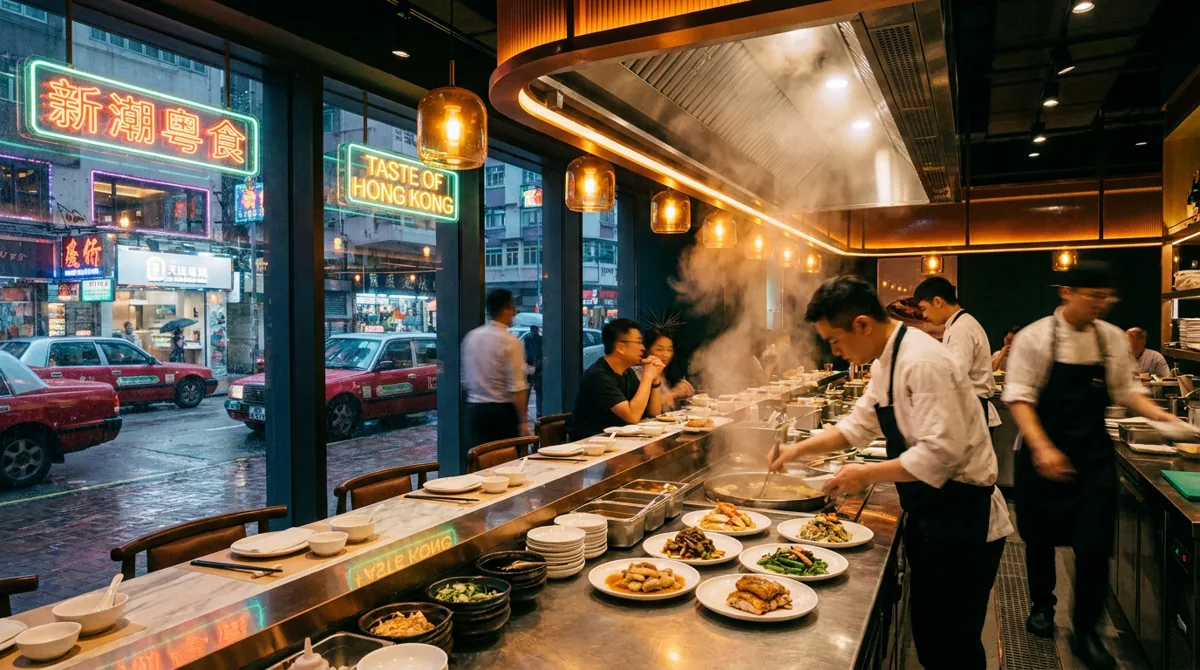
Illustration: Yum Cha Now, AI-generated. It sets the scene and is not a photograph of the venue.
Some of the best meals in Hong Kong are hiding one floor above a wet market. The city's cooked-food centres, municipal halls full of tiny independent stalls firing woks at full blast, serve cheap, fresh, no-frills Cantonese cooking that puts plenty of restaurants to shame, at a fraction of the price. They are the indoor descendants of the old open-air dai pai dong, and one of the city's great everyday secrets.
Here is what they are, what to order, and how to eat in one like you belong.
What a cooked-food centre is
One of Hong Kong's best-kept everyday secrets sits one floor above the wet market. Cooked-food centres, found inside many of the city's municipal services buildings, are halls packed with small independent stalls, each a tiny kitchen turning out cheap, fresh, made-to-order food. They are the indoor heirs of the open-air dai pai dong: the same wok-fired, unfussy Cantonese cooking and rock-bottom prices, now under a roof with fans or air-conditioning and shared communal tables.
For value and authenticity they are hard to beat. A table of friends can order a spread of wok classics (squid, clams, greens, a steamed fish, a claypot rice) and walk out having eaten brilliantly for a fraction of restaurant prices.
What to order
The heart of the menu is siu choi: robust, wok-fired Cantonese home cooking. Reach for salt-and-pepper squid, stir-fried clams in black bean sauce, sweet-and-sour pork, beef chow fun (dry-fried flat noodles), gai lan or other greens with garlic, and a whole steamed fish if the seafood looks good. Claypot rice, especially in the cooler months, is a centre speciality worth the wait.
Many centres also have specialist stalls: a congee-and-noodle counter, a seafood stall where you pick from the tank, sometimes a Thai or other regional kitchen. The move is to order a few sharing dishes across stalls, since the seating is communal anyway.
Finding a good one
Cooked-food centres are dotted across the city, typically above or beside a wet market in a municipal building. Some have built real reputations and draw queues; others are quiet neighbourhood canteens known only to locals. The reliable signal, as ever, is a busy stall with a turnover of regulars. Ask a local, or simply follow your nose up the stairs from a wet market.
They pair naturally with a market visit (see our markets guide) and make a superb, air-conditioned, rain-proof lunch or dinner: a brilliant wet-weather or beat-the-heat meal that costs almost nothing.
How to do it
A few pointers smooth the experience. It is cash-only at most stalls, and busy: expect to share a table and to order quickly. English can be limited, so point at what looks good on neighbouring tables or at the stall, and don't be shy. Peak meal times are loud and frantic; come a little before or after the rush for a calmer table.
Cooked-food centres are a disappearing-but-enduring piece of Hong Kong's food soul: the living link between the old dai pai dong and the modern city. Eat in one and you taste the real, everyday Hong Kong, wok smoke and all.