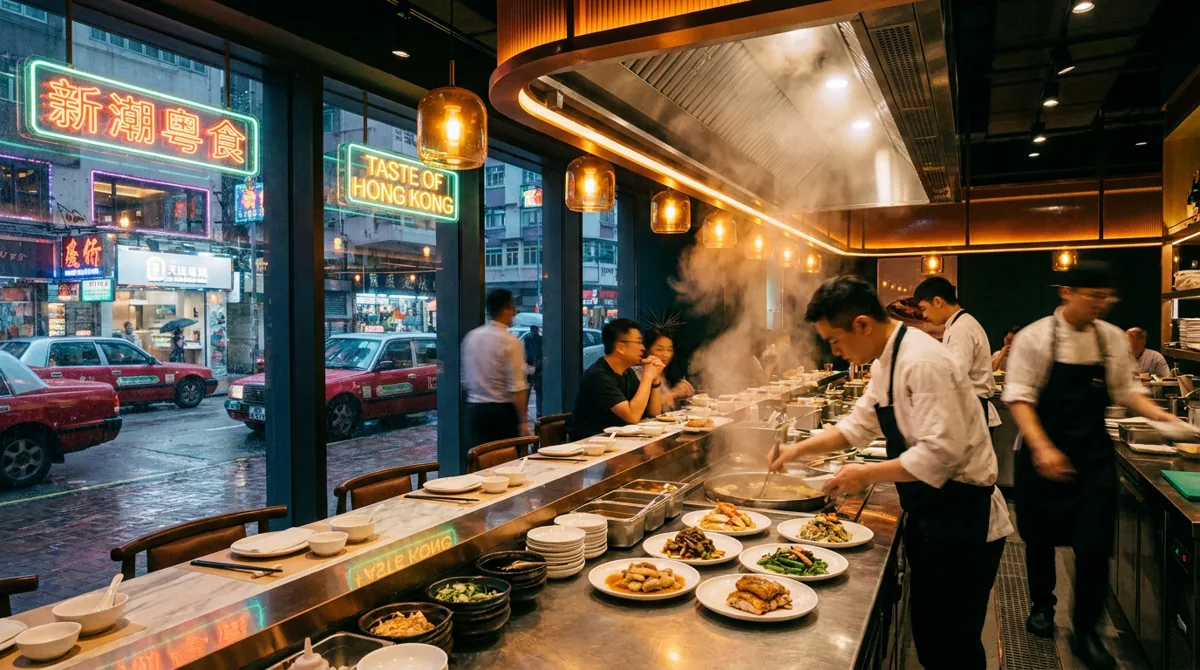
Illustration: Yum Cha Now, AI-generated. It sets the scene and is not a photograph of the venue.
There is a particular kind of Hong Kong evening (typhoon rattling the windows, or simply a deadline and no will to leave the flat) when the only sensible dinner is one that arrives at your door. The good news is that this is one of the easiest cities on earth to feed yourself without moving. The slightly confusing news is that the apps changed in 2025, and the one you remember may be gone.
Here is the clear, current picture of food delivery in Hong Kong: who the players are, what it costs, and how to get the best meal for the least money.
In This Guide
The 2026 Hong Kong delivery landscape: a two-horse race
If you last ordered a curry to your flat in 2023, the app you used may not exist anymore. Deliveroo shut its Hong Kong operation in April 2025 after nine years, selling parts of the business to foodpanda and switching off the rest. What was once a three-way fight is now a straight duel between foodpanda, the long-time incumbent, and Keeta, the deep-pocketed challenger backed by Chinese super-app Meituan that launched here in 2023 and grabbed a huge slice of orders almost overnight.
For you, the eater on the sofa, that consolidation is mostly good news: two well-funded apps fighting hard for your order means promo codes, delivery-fee waivers and free-dumpling-with-purchase deals are everywhere. The catch is that the restaurant you want might only be on one of them, and the cheaper total is rarely the same app two nights running. This guide breaks down how each works, what they cost, and how to never overpay.
foodpanda: the everything app
foodpanda is the veteran, and it shows in the breadth of the merchant list. It has the widest coverage of any platform in Hong Kong, from Michelin-adjacent kitchens to the cha chaan teng on your corner. Beyond restaurants, foodpanda runs pandamart, its own network of delivery-only convenience stores stocked with groceries, snacks, drinks and household basics that arrive in well under an hour, plus partnerships with supermarkets and pharmacies.
Its loyalty play is pandapro, a monthly subscription that waives delivery fees and adds discounts on qualifying orders; if you order more than a couple of times a week it usually pays for itself. The interface is polished, the live order-tracking is reliable, and customer service is reachable in-app. The downside: foodpanda's fees and service charges can stack up, so always read the final total rather than the headline dish price.
Keeta: the discount disruptor
Keeta arrived in late 2023 with a war chest and a simple strategy: undercut everyone. Backed by Meituan, the company that dominates food delivery in mainland China, it poured money into rider incentives and customer promos and rapidly captured a large share of Hong Kong orders. In 2026 it remains the app to check first if you care about price: first-order discounts, delivery-fee-free thresholds and flash promos are frequent and genuinely generous.
Keeta's merchant list has grown quickly but is still catching up to foodpanda's in some neighbourhoods and at the very top end of dining. The app is fast, clean and built around speed and value rather than extras. If your local favourite is on Keeta, it is very often the cheaper way to order it.
How to never overpay: a 60-second routine
The single best habit is to keep both apps installed and treat them like flight-comparison sites. Search the restaurant on each, build the same basket, and look at the final total: dish prices plus delivery fee, plus any small-order or service fee, minus promos. They will differ, sometimes by a lot.
A few more money-savers that work in 2026: order above the free-delivery threshold (it is usually cheaper to add a drink than to pay the fee); avoid ordering in heavy rain or the 7–9pm peak when surge pricing bites; stack a first-order or referral code on whichever app you use less often; and if you are a heavy user, run the numbers on pandapro. For groups, one person ordering everything on a single account almost always beats four separate small orders each triggering its own fee.
Payment, coverage and the small print
Both apps run in English and Chinese and accept credit cards, Apple Pay, Google Pay and local wallets; neither expects tipping, though you can add one for the rider. Coverage spans Hong Kong Island, Kowloon and the New Territories, though delivery times stretch on the outlying islands and during typhoon season, when a Black Rainstorm or Typhoon Signal No. 8 goes up, riders come off the road and apps pause, so stock up before the storm.
One honest caveat: delivery is convenient, not cheap. Between the markup some restaurants apply to delivery menus, the delivery fee and the service charge, a HKD 80 meal can land at HKD 120. For a treat or a rainy night in it is worth it; for everyday eating, Hong Kong's density means there is almost always brilliant food a five-minute walk away.