Written by
Marco De Rossi — nightlife writer, former bartender, has been in these clubs since before the scene had a name · Updated May 29, 2026
Hong Kong's clubbing scene has a geography lesson attached to it. Lan Kwai Fong is where most people start — it's famous, it's easy to find, and it delivers exactly what you'd expect from Hong Kong's most tourist-accessible nightlife district. That's not a criticism; LKF works, it's consistently busy, and venues like Dragon-i have earned their reputations. But the more interesting story is what's happening elsewhere.
Wong Chuk Hang, on the south side of Hong Kong Island, has quietly become the city's warehouse club territory — the underground equivalent of what Shoreditch did for London or Red Hook for New York, except compressed into a former industrial district now served by an MTR station that makes it easier to get to than it should be. And then there are the residencies and regular nights that define what clubbing in HK actually feels like in 2026: resident DJs who've built followings, international guest slots that bring serious names to the city, and a local scene that has gotten significantly more sophisticated than it was ten years ago.
Summary: The best clubs and nights in Hong Kong include Dragon-i (60 Wyndham Street, Central — LKF legend, international guests), Boomerang (Wong Chuk Hang area — DJ Mag Top 100 two years running, resident DJs iLtik, Yaman, Krayon), Mihn Club (underground house and techno sanctuary), and the LKF Strip (Faye, LKF House, California Bar). Entry HKD 100–300 depending on night and venue.
The Clubs and Nights
A note on resident DJs and regular nights: clubbing in Hong Kong has historically been event-driven rather than residency-driven — big international names flying in for one-off nights rather than the kind of sustained residencies you see in Ibiza or Berlin. That's changing. The venues below have invested in building genuine resident programmes, and the city is better for it. Look for the recurring nights and the names who've built actual followings here.
Dragon-i is the institution that anchors LKF's reputation, having operated since it opened in the 1960s at this address. The venue does two things simultaneously: it runs a restaurant and lounge in the early evening, then transitions into a full nightclub operation after 10pm. The formula is Asian glamour — think bottles of Grey Goose in ice buckets, suited businessmen and their guests in VIP booths, a dance floor that fills with a crowd that dresses up because the venue expects it. Dragon-i consistently brings in international guest DJs for weekend nights, playing commercial and house-influenced sets that match the crowd. If you want the quintessential high-end Hong Kong nightclub experience — bottle service, good production, a crowd that's there to be seen — this is it. Smart dress enforced. Book a table if you want guaranteed entry on a big weekend.
AddressThe Centrium, 60 Wyndham Street, Central
Chinese Name龍-i
MTRCentral Station, Exit D1, 5 min walk up Wyndham Street
HoursMon–Fri 12pm–11pm (restaurant); club from 10pm Fri–Sat
EntryHKD 100–300 depending on night; VIP tables from HKD 2,000+
MusicCommercial house, R&B, international guest DJs; resident programme
Dress CodeSmart to smart casual; no sportswear; fashion-forward encouraged
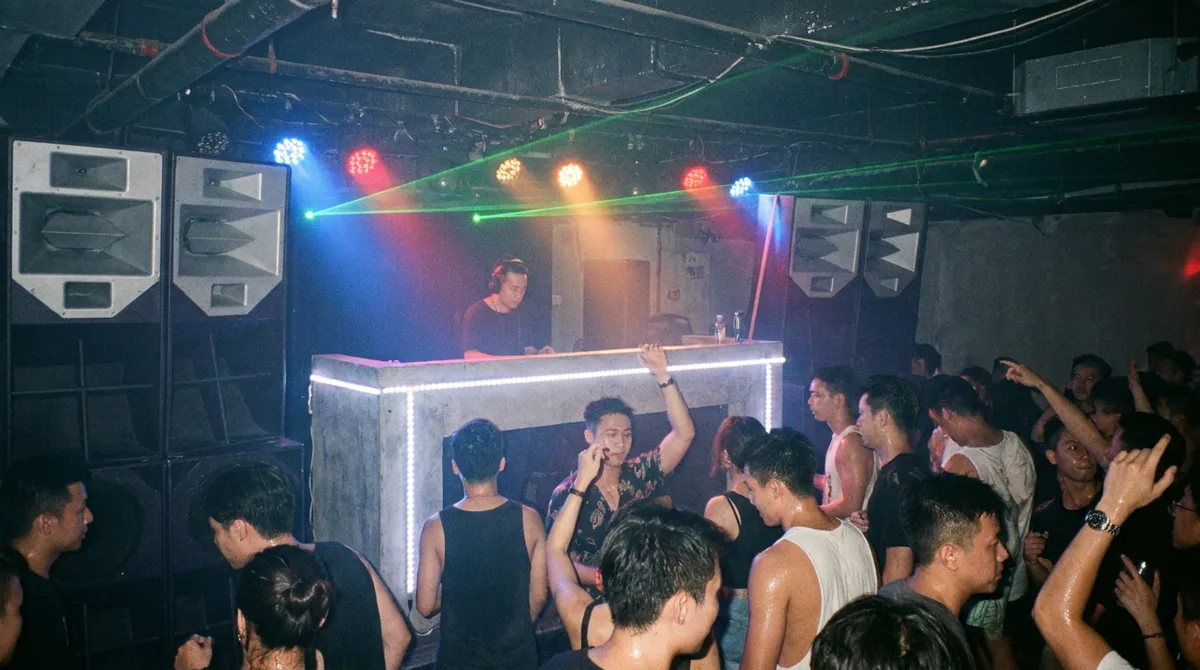
Boomerang is the club that changed the conversation about Hong Kong's nightlife scene internationally. It landed on DJ Mag's Top 100 Clubs list for the second consecutive year, which is the kind of recognition that gets people on planes. The venue is in Wong Chuk Hang — the industrial district on the south side that's become the epicentre of Hong Kong's more serious clubbing scene — and its musical curation is built around a genuine resident DJ programme. iLtik, Yaman, and Krayon are the resident names who carry the programme between international bookings, and they've built enough of a following that nights without a big international name still fill. The sound system is the real deal. The crowd is more musically focused than what you'll find at Dragon-i — people are there for the music first, the scene second. This is where Hong Kong's clubbing scene is at its most credible in 2026.
AddressWong Chuk Hang, Aberdeen (check venue website for exact address)
Chinese Name回力鏢夜店
MTRWong Chuk Hang Station, Exit A, 5–10 min walk
HoursFri–Sat from 10pm; check boomeranghk.com for event nights
EntryHKD 150–300; varies by event; check in advance
MusicHouse, techno, electronic; resident + international bookings
Dress CodeRelaxed; music first — no strict dress policy
"Wong Chuk Hang happened because the city needed somewhere the music could be the point — not the bottles, not the table service, not the designer handbags. The south side delivered."
Mihn Club — the name uses the Chinese character 宀, a roof radical that suggests shelter, a home — is described as Hong Kong's undisputed underground sanctuary for pure house and techno. It's built a devoted following of Hong Kong's most serious dance music fans, operating on the principle that the music and the dance floor matter above everything else. The venue prioritises the listening and dancing experience: the production is good, the booking policy is musical rather than commercial, and the crowd is there because they care about what's on the decks. Mihn represents the part of Hong Kong's club scene that doesn't headline magazines but sustains itself through genuine musical community. For the most current location and event information, check their social media — underground clubs in Hong Kong tend to operate with a degree of deliberate opacity about addresses that is part of the culture rather than an inconvenience.
LocationHong Kong Island; check Instagram for current address
Chinese Name宀夜店
HoursEvent-based; Fri–Sat typically; follow on Instagram
EntryHKD 100–200; varies by event
MusicPure house and techno; serious underground booking policy
Dress CodeNone — come as you are
Bing is part of the Wong Chuk Hang warehouse club cluster that has given Hong Kong's south side a genuine late-night identity. The name means "ice" in Cantonese, and the aesthetic leans cool in both senses: visually minimal, musically focused on the kind of electronic music that works in warehouse spaces. The programming runs across house and electronic sub-genres, with a booking policy that balances international names with the increasingly strong local DJ talent pool that Wong Chuk Hang has helped cultivate. The industrial setting is the right environment for this kind of music — high ceilings, concrete floors, sound systems that can actually do what they're designed to do. Going here mid-week for a local resident night is often a better experience than the packed weekend international slots.
AddressWong Chuk Hang, Aberdeen (check venue social media for exact address)
Chinese Name冰夜店
MTRWong Chuk Hang Station, Exit A, 10 min walk
HoursFri–Sat from 10pm; occasional weeknight events
EntryHKD 100–250; varies by event
MusicHouse, electronic; local and international bookings
The LKF Strip — What Else Is There
Lan Kwai Fong proper — the street itself and the surrounding blocks between D'Aguilar Street and Wyndham Street — has more bars than clubs, but several venues run regular DJ nights that are worth knowing about:
LKF and Central Nightclub Options
- Faye — One of LKF's more recent additions, with a sleeker aesthetic than the older strip venues and a programming focus on R&B and commercial electronic. A step up from the Carlsberg-and-chaos end of LKF.
- LKF House — The LKF Hotel's rooftop bar runs DJ nights on weekends with decent views across the central district. Entry via the hotel; smarter crowd than street level.
- California Bar — A LKF stalwart that has been part of the strip for decades, running DJ nights and live music with a crowd that mixes expats and tourists. Unpretentious by LKF standards, which is a recommendation.
- Club 97 — One of the circuit's older names, running dance nights with a more diverse crowd than many LKF venues. The 97 name is a reference to the handover, which tells you something about how long this operation has been around.
Wan Chai Clubs — The Other Side
Wan Chai's clubbing scene runs parallel to its dive bar scene — the same streets, later hours, more dancing. Chaos on Jaffe Road is the club most associated with Wan Chai proper: a multi-room venue that covers commercial dance music and hip-hop, with a cover charge and a crowd that tends younger than the LKF premium circuit. The bars on Lockhart Road run DJ nights informally without quite becoming clubs — Carnegie's gets a dance floor going after 10pm without ever being quite a proper nightclub. The distinction between Wan Chai's bars and clubs is genuinely porous in a way it isn't in LKF.
Which Night to Go Where — 2026 Quick Guide
- For maximum production and international names: Dragon-i on Wyndham Street; check their event calendar and book a table in advance.
- For the most credible music scene: Boomerang in Wong Chuk Hang; check their booking calendar for international guests; resident nights with iLtik, Yaman and Krayon are excellent.
- For underground house and techno: Mihn Club; follow their Instagram for current location and event details.
- For an accessible warehouse club experience: Bing in Wong Chuk Hang; good for a mid-week introduction to the south side scene.
- For the classic Hong Kong LKF experience: California Bar or Faye on the strip itself; no planning required, walk in, see what's on.
- General rule: LKF is better Thursday and Friday; Wong Chuk Hang is better Saturday. Both thin out after 3am regardless of when they technically close.
Club Night Updates Every Thursday
What's on this weekend — DJs, new venues, events worth going to. Hong Kong nightlife weekly.
Frequently Asked Questions
What is the best nightclub area in Hong Kong?
Hong Kong's nightclub scene splits across three zones. Lan Kwai Fong (LKF) in Central is the most famous — a steep alley and surrounding streets packed with bars and clubs, including Dragon-i. Wan Chai's Lockhart and Jaffe Road area is older and more mixed. Wong Chuk Hang on the south side of Hong Kong Island has become the location for the city's underground warehouse club scene, with Boomerang and Bing leading the charge. The MTR's Wong Chuk Hang station makes the south side easier to access than it once was.
What is the dress code for Hong Kong nightclubs?
Dress codes vary by venue. Dragon-i and upscale LKF clubs enforce smart casual to smart: no sportswear, no trainers, no baseball caps. The underground clubs in Wong Chuk Hang are generally more relaxed — emphasis on music over appearance. When in doubt, dress slightly smarter than you think you need to. LKF venues won't turn away people who look like they made an effort.
How much does entry cost at Hong Kong nightclubs?
Entry costs vary significantly. Dragon-i charges HKD 100–300 depending on the night. Boomerang and the Wong Chuk Hang clubs typically charge HKD 100–250. Many Wan Chai bars operate without a cover. VIP table service at premium clubs starts around HKD 2,000 and can go significantly higher for international DJ nights.
What time do Hong Kong clubs close?
Hong Kong nightclubs technically close at 5am under licensing, but most peak around 1–2am and thin out by 3am. The MTR stops at around 1am, so factor in taxi costs for late nights. Taxis are plentiful in LKF, Wan Chai and TST after midnight.
Nightclubs
DJ Nights
LKF
Lan Kwai Fong
Wong Chuk Hang
House Music
Techno
Wan Chai