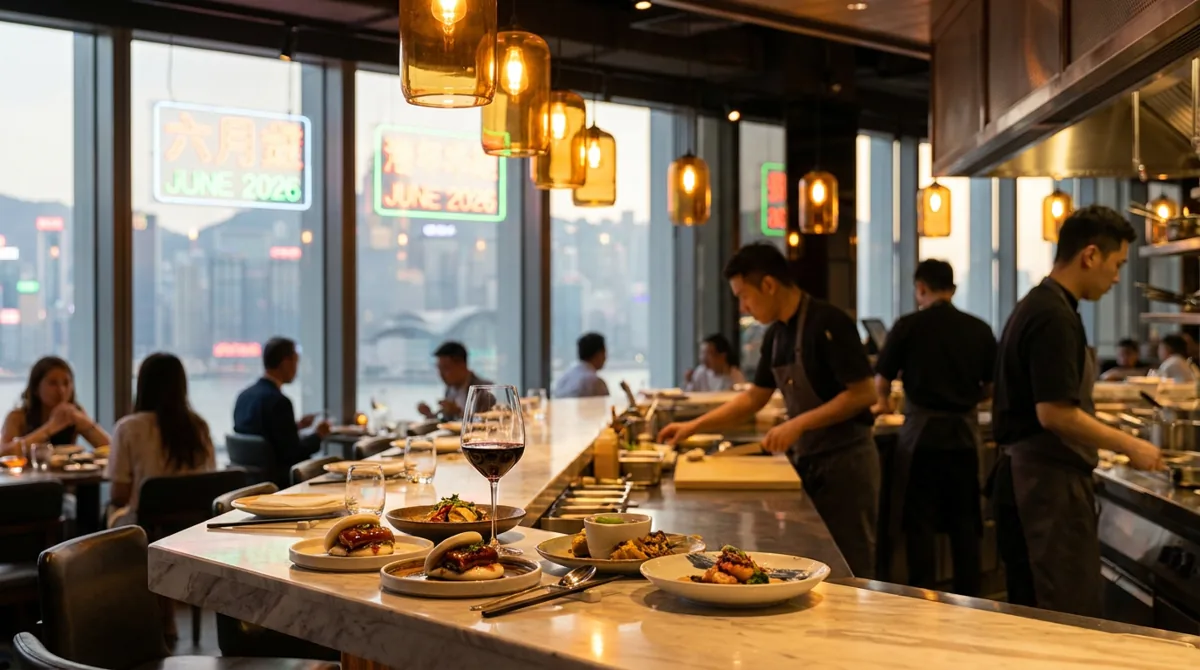
Illustration: Yum Cha Now, AI-generated. It sets the scene and is not a photograph of the venue.
Hong Kong does Korean food in volume: fried chicken on every other corner, barbecue smoke drifting out of Tsim Sha Tsui, stews bubbling away in tiny Causeway Bay basements. What it rarely does is Korean seafood. That gap is exactly what Minyoung Fresh Fish Factory (民迎) has arrived to fill, opening its first-ever overseas branch in North Point (北角).
The draw here is hoe (회), Korean-style sashimi, served the way it is back home, with chilli-vinegar dips rather than just wasabi and soy. It is a quietly significant opening for a city that thinks it has tried every kind of raw fish going. Here is what the brand is, what to order, and how to find it.
In This Guide
What Is Minyoung Fresh Fish Factory?
Minyoung Fresh Fish Factory (民迎) is a Korean restaurant chain built around one thing: fresh, well-priced seafood. According to Time Out Hong Kong, it runs more than 40 locations across South Korea, where it is known for a wide range of hoe and sushi. The North Point branch is its first outside South Korea: a genuine debut rather than another franchise of an already-familiar name.
That matters because Korean seafood specialists are thin on the ground in Hong Kong. We have no shortage of Korean cooking, but the raw-fish corner of it has been all but missing. Minyoung steps straight into that space, and it has done so quietly: the shop opened from 15 May 2026, with little fanfare beyond a flurry of local food-media notices and its own social channels.
The location is telling, too. Rather than the obvious Korean clusters of Tsim Sha Tsui, Minyoung has planted itself on Electric Road in North Point: an old-school, densely residential Island-side neighbourhood with a deep bench of everyday eateries and a growing roster of newer arrivals. It is the kind of address locals reach before tourists do.
What Is Korean Hoe, and How Is It Different From Japanese Sashimi?
If you only know raw fish through a Japanese lens, hoe (회) will feel familiar but not identical. The headline difference is texture. As Time Out Hong Kong explains, hoe is sliced slightly thicker than Japanese sashimi, which gives it a firmer, bouncier bite: chewier and springier rather than silky and melting.
The seasoning is where it really diverges. Japanese sashimi leans on wasabi and soy; hoe is usually eaten with a vinegar-based gochujang dip called chojang, or with sesame oil and fresh garlic, or with ssamjang. It also comes with the trimmings of a Korean table: lettuce and perilla leaves for wrapping each piece into a quick, herby parcel.
The practical upshot: this is a different eating experience from your usual omakase counter, even if the fish in the case looks similar. Come expecting sharing platters, punchy condiments and a more boisterous, table-centred meal: closer in spirit to a Korean seafood market than a hushed sushi bar.
What's on the Menu?
The North Point kitchen mirrors the chain's Korean menus. The centrepiece is the premium hoe platter, built around salmon, yellowtail and an assortment of Korean white fish: Time Out lists flatfish, black sea bream and rockfish among them. These are the platters designed to be shared, dip-by-dip, across a table.
Beyond the raw spreads, expect assorted nigiri sushi and sashimi rice bowls, plus a run of cooked and spiced seafood dishes that show off the Korean side of the kitchen: mala stir-fried clams, a spicy fish roe stew, and even a spicy cold raw seafood soup, a bracing, chilled dish that is a summer favourite in Korea and an unusual find in Hong Kong.
Minyoung Fresh Fish Factory (民迎)
A North Point debut for a popular Korean seafood chain, focused on shareable hoe platters with chilli-vinegar dips, alongside sushi, sashimi bowls and spicy Korean seafood plates. Best for a group raw-fish feast with a Korean accent.
Why It Matters: Hong Kong's Korean Dining Wave
Minyoung is not arriving in a vacuum. The city is in the middle of a Korean dining wave, and 2026 has been a busy year for K-openings. Around the same window, the established Korean brand Obongzip, known across Asia for its fire-grilled spicy octopus and pork-belly bossam, opened in Tsim Sha Tsui, part of a steady drumbeat tracked in our guide to new restaurants opening in Hong Kong this June.
What makes Minyoung stand out within that wave is its narrow focus. Where most Korean newcomers chase the familiar crowd-pleasers, this one bets on hoe: a speciality that even committed Korean-food fans in Hong Kong have struggled to find done properly. It widens the city's raw-fish vocabulary beyond the Japanese default, sitting alongside the sushi counters in our roundup of the best Japanese restaurants in Hong Kong.
It also lands during a genuinely strong stretch for new tables. If you like to eat at the new and the notable, Minyoung joins openings like Sai Ying Pun's Argentinian steakhouse Don Pedro on a crowded calendar: all of which feed into the bigger picture sketched in our guide to the best restaurants in Hong Kong and our running log of Hong Kong's best new openings.
Getting There: North Point and Fortress Hill
Minyoung sits at 233 Electric Road (電氣道), on the long, low-key stretch that runs between Fortress Hill and North Point proper. The address is part of the City Garden complex, so it is easy to combine with a wander around this slice of the Island's eastern districts.
The nearest MTR is Fortress Hill (炮台山): take Exit A for a short walk along Electric Road. North Point Station, a transfer point between the Island and Tseung Kwan O lines, is a little further east, so Fortress Hill is your quicker option. Buses and trams along King's Road, one block south, drop you within easy reach too.
One practical note. Because the official hours had not been confirmed at the time of writing, it is worth a quick check of the restaurant's Instagram before you set out, especially if you are planning a weekend group dinner, when a newly opened, single-branch spot like this can fill fast. For more of what is nearby and new across the city, the YumChaNow venue directory maps where to eat and play.
Frequently Asked Questions
Eat Your Way Through Hong Kong
From first-overseas openings to the city's best dim sum, YumChaNow tracks where to eat and drink across Hong Kong. Subscribe for the weekly what's-on guide and never miss the next big table.