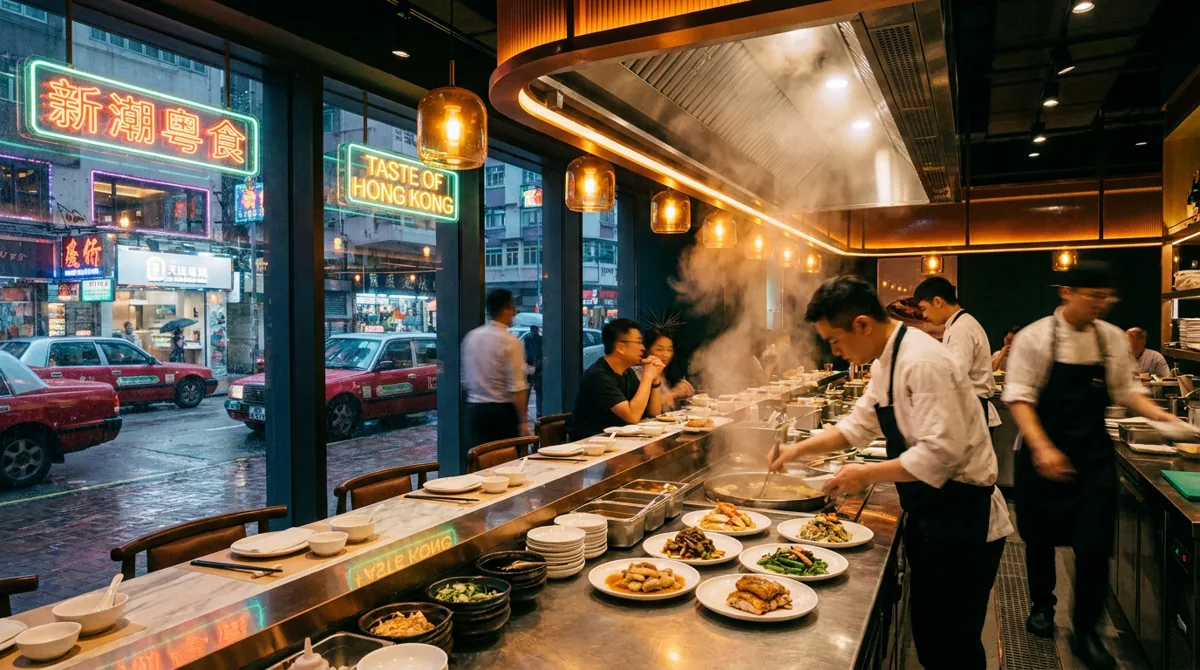
Illustration: Yum Cha Now, AI-generated. It sets the scene and is not a photograph of the venue.
People have been writing the obituary for Hong Kong's food scene for years. Rents are too high, the headlines went; the talent is leaving; the magic is gone. We never quite bought it: neighbourhoods across this city have fed themselves brilliantly on almost nothing for decades. But something has shifted. In 2026, Hong Kong's food scene isn't surviving. It's surging.
This is the year the numbers caught up with what those of us who eat for a living have been feeling on the ground. A record-busy Michelin haul. The Asia's 50 Best Restaurants ceremony held here for the first time. A run of confident, distinctive new openings. And, just as importantly, a renewed pride in the cheap, brilliant, everyday food that was never going anywhere. The Hong Kong food scene is having a moment, and it's worth understanding why.
In This Article
The Michelin Haul Was Real, Not Just Hype
Let's start with the cold data, because for once it tells a genuinely encouraging story. The MICHELIN Guide Hong Kong & Macau 2026, announced on 19 March, awarded stars to 77 restaurants in Hong Kong: 57 with one star, 13 with two stars, and seven with the rarefied three. Across Hong Kong and Macau combined, 98 restaurants hold stars, 15 of them new to the guide.
Those aren't the numbers of a city in decline. They're the numbers of a city defending, and extending, one of the densest concentrations of fine dining anywhere on earth. Among the headline movements: China Tang and Sushi Takeshi each earned a first star, Cristal Room by Anne-Sophie Pic climbed to two stars, and L'Atelier de Joël Robuchon re-entered with two stars after reopening in late 2025.
What I find more telling than any single promotion is the breadth. The 2026 guide rewards Cantonese institutions and French ateliers, sushi counters and Sichuan kitchens, in roughly equal measure. A food scene that can do all of that at once isn't coasting on reputation. It's working.
Why Asia's 50 Best Coming Here Actually Matters
Here's the development that should make every Hong Kong eater sit up. In March 2026, the city hosted the Asia's 50 Best Restaurants awards ceremony for the first time, drawing more than a thousand chefs, restaurateurs, sponsors and international media.
Why does that matter beyond a glamorous night out for the industry? Because hosting Asia's 50 Best is not a neutral honour. It's a vote of confidence in a city's restaurant culture and its ability to put on a show for the people who shape global dining conversations. Singapore and Bangkok have hosted before. Hong Kong getting its turn places it squarely back in that top tier.
The knock-on effects are concrete. Visiting chefs do collaboration dinners. International media file stories. Reservations spike. And, more quietly, ambitious young Hong Kong cooks see the world's attention land on their home town and decide to stay and build something here rather than chase it overseas. That last effect is the one that lasts longest.
The Openings Tell the Story Better Than the Awards
Awards are lagging indicators. The openings are the leading ones, and over the past year they've been arriving with real intent. The return of L'Atelier de Joël Robuchon in late 2025, straight back to two stars, is the kind of statement reopening that only happens in a market operators believe in.
Then there's the Bib Gourmand tier, which I'd argue is where the scene's health really shows. The 2026 Michelin Bib Gourmand list named 70 Hong Kong venues, six of them brand new, spanning Cantonese classics, Neapolitan pizza, Chiu Chow seafood, Thai street food and Portuguese cooking. That spread (affordable, varied, geographically all over the map) is exactly what a thriving food city looks like from the ground up.
It also speaks to sustainability becoming part of the conversation. Amber, Feuille, Mora, Roganic and the UTM Educational Restaurant all hold the Michelin Green Star, proof that the city's best kitchens are increasingly thinking about sourcing and waste, not just plating.
If you want to feel where the energy is, I'd start with the cocktail-and-small-plates wave reshaping Hong Kong's drinking-and-dining crossover: our guide to five new bars in Hong Kong for 2026 tracks several kitchens doing genuinely interesting food alongside the drinks.
It's Not Just the Fine Dining, and That's the Point
Here's where I want to push back on the way this story usually gets told. The "renaissance" narrative tends to fixate on tasting menus and tweezered plates. But the real strength of Hong Kong food has always been its bottom and middle, not just its top.
A city where you can eat a three-star lunch and a HKD 28 bowl of cart noodles on the same afternoon, and rate both honestly, is doing something almost no other food capital manages. The cha chaan teng, the dai pai dong, the dim sum trolley. These aren't nostalgic relics propping up the fine-dining headline. They're the foundation the whole thing stands on.
And in 2026 there's a discernible renewed pride in that foundation. Younger operators are reviving classic formats with care rather than gimmickry; long-running noodle shops and roast-meat counters are being celebrated rather than written off. If you want proof the everyday scene is thriving, our roundups of the best cha chaan teng in Hong Kong and best dim sum in Hong Kong are a good place to taste it.
The Renaissance at a Glance
| Signal | What Happened in 2026 | Why It Matters |
|---|---|---|
| Michelin stars | 77 HK restaurants starred; 7 three-star, 13 two-star, 57 one-star | One of the densest fine-dining maps on earth, still growing |
| Asia's 50 Best | Ceremony hosted in Hong Kong for the first time (March 2026) | Global vote of confidence; draws talent and attention |
| New stars | China Tang, Sushi Takeshi (1★); Cristal Room (2★) | Fresh names, not just incumbents holding ground |
| Reopenings | L'Atelier de Joël Robuchon back at two stars | Major operators betting on the market again |
| Bib Gourmand | 70 HK venues, 6 new: pizza to Chiu Chow seafood | Health at the affordable, everyday level |
| Green Stars | Amber, Feuille, Mora, Roganic, UTM | Sustainability now part of fine dining |
So Is This a Real Renaissance, or Just a Good Year?
The honest answer is that one strong year doesn't make a renaissance. Rents are still brutal. Staffing remains a genuine crisis across the industry. Plenty of good restaurants will still close in 2026 for reasons that have nothing to do with the quality of their cooking.
But the underlying signals are structural, not cosmetic. Hosting Asia's 50 Best isn't a one-off fluke; it's a position the city has worked to reclaim. The breadth of the Michelin list reflects depth, not a couple of celebrity arrivals. And the renewed confidence among homegrown chefs, the sense that you can build a serious career here rather than only in London or Tokyo, is the kind of thing that compounds over years.
My read, after a lot of meals and a fair amount of scepticism, is that this is more than a good year. It's a city remembering what it is. Hong Kong has always been one of the great eating cities on the planet. In 2026, it's finally getting the recognition, and the swagger, to match. For a sense of how all this fits into a wider cultural revival, our look at Hong Kong's best public art installations tells a parallel story across the city.
Frequently Asked Questions
Taste the Moment
From three-star tasting menus to HKD 28 cart noodles, YumChaNow covers every corner of Hong Kong's food scene. Subscribe and never miss an opening.